

Zach Bryan’s “With Heaven On Top” is the diary of a restless traveler

Beer. Trucks. America. A double entendre that relates back to all three.
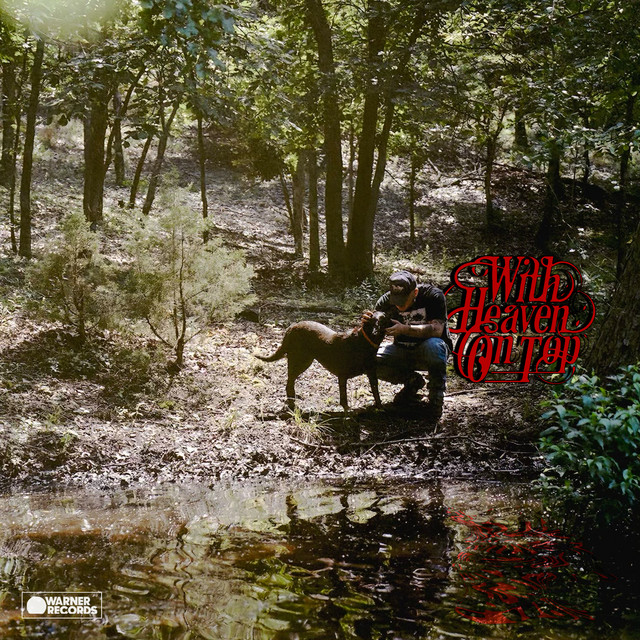
For most of my life, my understanding of country music rarely extended beyond these well-worn tropes. Stunted by a household that primarily listened to Motown’s Greatest Hits and Christian radio stations, I had largely constrained the nuances of this genre to cowboy boots and line dancing. And, up until a few months ago, I was in no way eager to transcend these stereotypes. It was not until this summer, when my mother and I planned a visit to Nashville—the widely proclaimed country music capital—that I felt compelled to approach the genre with a new breadth of cultural literacy. It was during this period of trip preparation that I first found myself wandering upon Zach Bryan’s discography, an artist who had long lingered on my friend’s Spotify Wrapped, but also one whom I was largely unfamiliar with. (It was also during this admittedly belated research phase that I learned, to my embarrassment, that Morgan Wallen’s “Broadway Girls” is not, in fact, a tribute to musical theater, but that is a story for another time.) As a Navy veteran whose songs splice together barstool confessions, roadside America, and bruised spirituality, Bryan quickly became my gateway into contemporary country upon listening to his previous work. When it was announced that he would be releasing his sixth studio album, With Heaven on Top, on Jan. 9, I was eager not only to hear how his sound has evolved over the past decade but also to experience one of his releases in real time as a newer fan of both Zach Bryan and country music itself.
Of the early songs on this 25-track album (with the first track functioning as a spoken-word prelude), Track 3, “Appetite,” immediately stood out to me. It operates as a de-facto introduction to the rest of the record, offering a concentrated glimpse of what follows. The track orbits on his fixation on excess and the hollowness of the world he inhabits, guiding the listener through a narrative of alcoholism, imposter syndrome, and a persistent undercurrent of fear. The chorus carries an anthemic energy, marking a notable departure from his typically acoustic-driven sound. A burst of bright horns and a heartbeat-like, driving tempo ratchet up the tension and render the song undeniably engaging.
“Say Why,” the ensuing track, channels its energy into a kind of lived‑in nihilism, and it does so through explicit biblical allusion. The insistent litany of the lyric “forty”—forty ounces, forty days drunk, forty days sober, forty days in the desert—echoes the forty days of trial and wandering in the Bible, an intentional choice made by Bryan in order to display the lack of substance he feels from arbitrary mile‑markers amidst trial and tribulation. The chorus’s repeated plea—“say why”—lands like an unanswered prayer, and the lack of response becomes the point: the song lingers in Bryan’s dread that the dull repetition of drinking, drying out, and waking up to the same indifferent world will leave him with no higher purpose.

My personal favorite track of the album emerged with the beautifully languid sixth track, a placating ballad called “Drowning.” Undoubtedly, it is indie artist Heaven Schmitt’s background harmonies that make this song the underrated ear candy that it is. Their voices lilt seamlessly through the track, with Schmitt’s falsetto layering with Bryan’s in a way that feels airy and emotionally precise. In terms of lyricism, I remain a sucker for open-ended streams of consciousness, and “Drowning” executes this to perfection.
Though Bryan has publicly characterized the tenth track, “Bad News,” as apolitical, I was pleased upon listening to find out that this reading is largely disingenuous. Its lyrics resonate unmistakably with contemporary political anxieties, singing, “And ICE is gonna come bust down your door… I got some bad news / The fading of the red, white, and blue.” A poignant blend of cultural references compounded with the drawl of everyday life, he draws upon a generational classic with the invocation of “This land’s your land / This land mine too,” reframing patriotic language into something fractured and contested to mirror the national mood.
As a Navy veteran himself, the perspective that Bryan brings to “Bad News” encapsulates today’s American reality in a way that is both succinct and foreboding: it articulates a life that somehow continues to move on in a climate that often seems on the edge of stagnation.

The album takes a more somber turn with the eleventh track, “South and Pine,” where Bryan makes some very not-so-subtle references to his ex-girlfriend, internet personality Brianna “Chickenfry” LaPaglia. Reflecting upon their very public separation last summer (plus, Bryan’s engagement and marriage to her doppelgänger all in the span of the last six months), he laments the love and loss of their tumultuous ending, ultimately finding solace in their incompatibility when singing, “Another day you’re dancin’ in my mind / Another day you’re better off not mine.”
“Cannonball,” track 12, is one of the strongest lyrical contenders of the album, a touching hymn to past nostalgia and disillusionment. Bryan uses the duality of the title to mobilize a seemingly simple image into one of unselfconscious joy. Positioned alongside recollections of “drunk days on backroads” and trips through Yosemite, Reno, and Cannon Beach, the motif anchors the song in a past where recklessness still felt harmless before a time reality set in with age.
A sharp self‑awareness is introduced about the costs of turning real people and memories into material when Bryan writes, “They’re using my muses to make fun of me.” The “muses” in question are the very figures who populated those carefree summers, now exposed to the harsh environment of real life. In this juxtaposition, “Cannonball” captures a complex emotional trajectory—from youthful abandon to adult discomfort with exploitation—and it is this layered treatment of both image and subject that makes the song, lyrically, one of the most compelling entries.

Not long after dwelling in the pits of his past relationship, Bryan serenades his current wife with “Slicked Back,” a buoyant ode with an infectious chorus that has already capitalized on the content of my TikTok algorithm since its release. There is little to complain about in this classic love song, a widely admired gem of a largely forlorn and ruminative discography. It doesn’t pack in convoluted philosophical themes but instead offers a very necessary area of breathing room next to its surrounding tracks.
My overwhelming initial thought while listening to track 16, “Rivers and Creeks,” was that Bryan’s falsetto is painfully difficult to ignore. Rather than sounding airy and hollow, he barely grazes the right notes and falls flat—literally—on almost every attempt. That being said, it is probable that not everyone will find this as disconcerting as I did. My boyfriend found nothing amiss, while I, on the other hand, was chronically distracted by the flat delivery and underwhelming vocal execution. Sorry, man.
But, I digress: outside of this lapse of lackluster choral performance, I loved the sprightly nature of the chorus. Bryan redeems himself in the field of vocal experimentation with a zany Elvis Presley interpretation, an unconventional but appreciated choice that contributed perfectly to the overall character of the song.

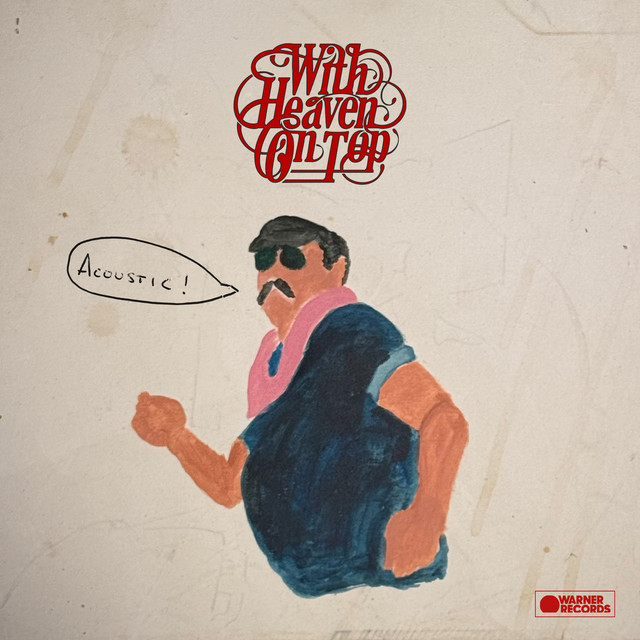
My primary criticism is structural: a twenty-five-track album is excessive. There are only so many times a G-to-C-to-A minor chord progression can be recycled before it begins to feel inert, and this album—along with virtually his entire discography, in fact—crosses that threshold early. Across “If They Come Lookin’,” “All Good Things Past,” and “Sundown Girls,” Bryan returns repeatedly to indistinguishable Americana music, his monotonous unplugged acoustic tracks all sounding the same. I can’t count how many times he sings of California highways, incarceration, or subtle jabs at his ex-girlfriend throughout the album.
This is not to say that these tracks are bad or that they completely lack meaning; however, the inclusion of what feels like a lot of “filler tracks” dilutes the overall quality and novelty of the album. While thematically coherent, the repetition dulls their impact, and the most poignant, artistically unique tracks tend to feel claustrophobic next to a lot of superfluous songs.

So, in terms of beer, trucks, and America? After nearly ninety minutes with With Heaven on Top, it becomes clear that Bryan is not necessarily interested in abandoning those cliches so much as hollowing them out and explaining what is left.
Bryan’s overlong tracklist and recycled progressions may dull parts of the project, but they do not obscure its central achievement—a body of work that complicates the beer‑and‑backroads mythology it appears to embody. In the end, With Heaven on Top proves that beneath the surface of all those trucks and taverns lies an artist with a lot to say and no time wasted saying it.