
“Wicked: For Good” would’ve been changed for the better if it and its predecessor were a singular feature film

The following story contains spoilers for the musical film Wicked: For Good.
This weekend, in some major turn of events, I convinced my entire family—including my grandparents and my brother’s girlfriend—to watch Wicked: For Good. Excited, surrounded by loved ones, and stacked with Trolli gummy worms, I sat down with great hopes and a bit of apprehension.
I came into this film knowing that there would be significant extrapolations. After all, the one-hour-long Act Two of the stage musical couldn’t be made into a 137-minute movie without additional story. But what is the difference between necessary extrapolation and filler? And how much of each does this film need to prove that a two-part series, rather than a singular, long feature film, is absolutely necessary?
In my not-so-humble opinion, the answer is no. The Wicked duology was not necessary, and I would have preferred a long, singular movie. While arguments could be made for two 90-minute films, I am inclined to agree with the belief that Universal Pictures made two movies for a cash (and award) grab.
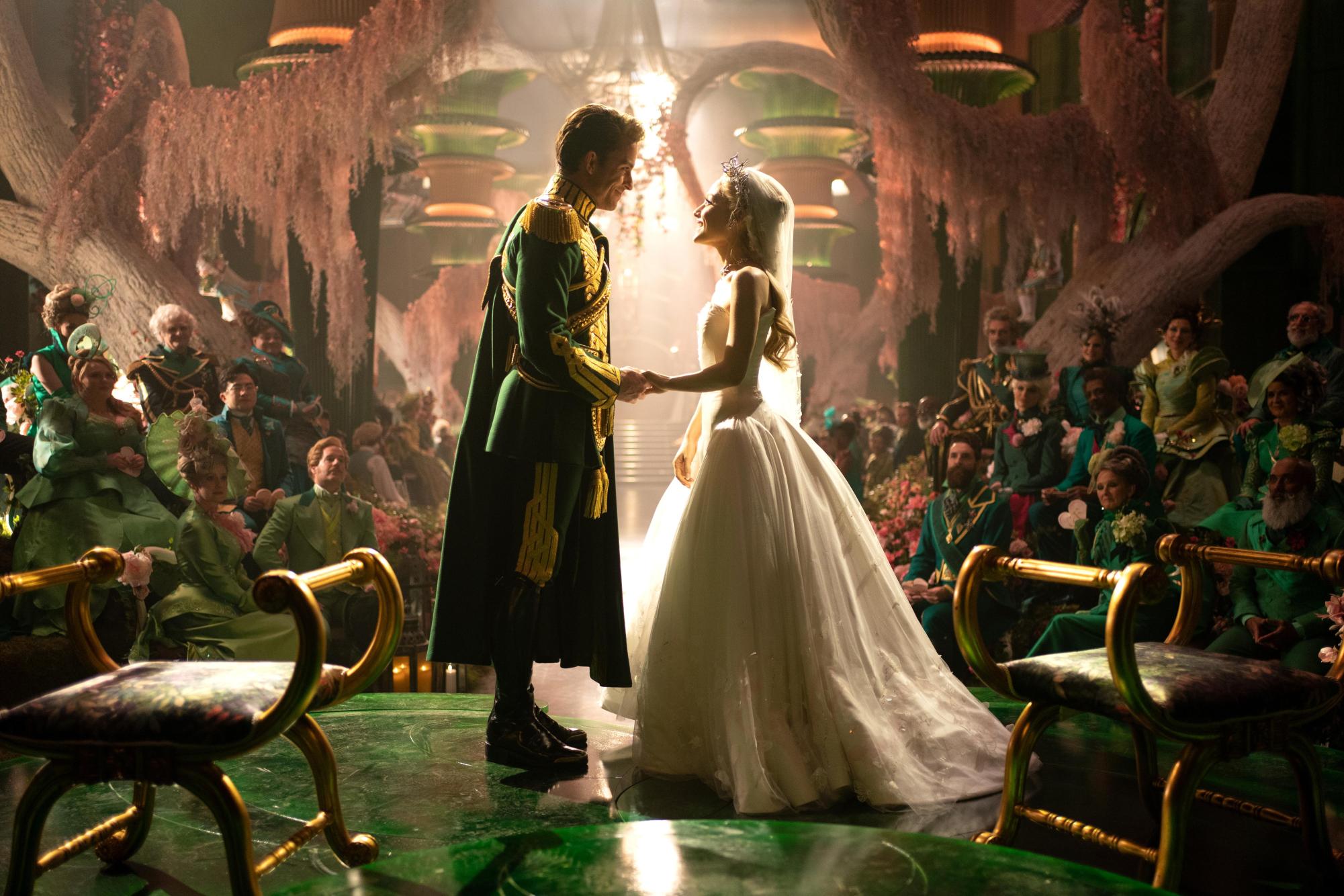
The additions in this film included two new songs, Glinda (Ariana Grande) and Fiyero’s (Jonathan Bailey) wedding scene, and a number of useless, short filler sequences. Existing songs were also adapted to adhere to plot changes, including “Wonderful,” which was changed to include Glinda, and “The Wicked Witch of the East,” updated according to changes to Nessarose’s (Marissa Bode) character arc. Some of these changes proved beneficial to the plot; for the most part, however, they just hindered my ability to enjoy the film.
One thing this movie definitely did right was highlight the oppression of animals, which we don’t see in the stage musical. The first original song, “No Place Like Home,” does an alright job of conveying this. In the scene, Elphaba (Cynthia Erivo) tries to convince fleeing animals to fight for their rights alongside her. Ultimately, she fails, and the animals escape. I did enjoy this scene as it lightly showcased the animals’ point of view, but the song felt drawn out and unnecessary. The oppression of Oz’s animals was much better conveyed in scenes that actually show animals being mistreated, such as the opening sequence or when Elphaba discovered animals trapped within the Wizard’s castle.
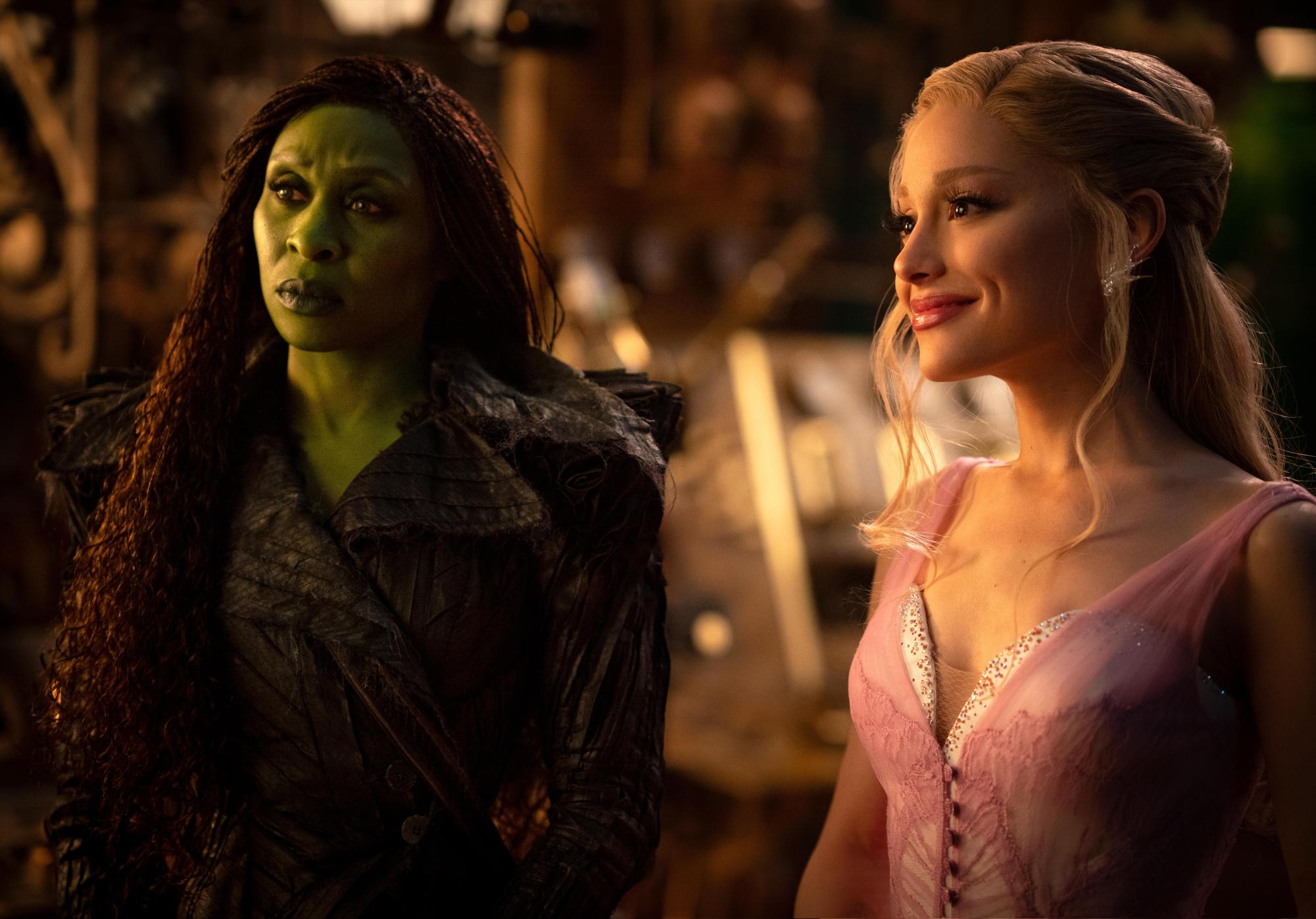
The second additional song was “The Girl in the Bubble”—another unfortunate filler number. It is no wild statement that Grande has an incredible voice. So why did it sound like she was whispering the whole movie? Many performers can artfully utilize the head voice to enhance their performance, but Grande was doing it every song for nearly the entire number—for Glinda, a hallmark coloratura soprano, no less. At some points, I could hear Grande’s pop star vocals come out, but only when she was losing the character voice of Glinda. Never did both her stunning vocals and the characterization of Glinda overlap. Not only did Grande’s singing fall flat in this track, but so did the message. The lyrics of this song express no deeper statement than what is already stated through added dialogue between Glinda and other characters. These lyrics might have struck home if they were sung with dynamic levels of power and emotion, but her quiet, sometimes inaudible, falsetto was underwhelming. Not to mention how the camera angles seemed to highlight Grande’s protruding sternum. More on that later.
The story of Wicked occurs over a collection of years, stretching from the characters’ time in magical high school (Shiz) to the ever-dramatic melting of the Wicked Witch of the West. The extended time gave director Jon M. Chu opportunities to explore new sides of the story—the animals or the munchkins, to name a few. Instead, Chu decided to elaborate on a few existing perspectives through a series of small, insignificant scenes. Glinda’s need to be revered—which was much better portrayed through the stage production’s subtle, indirect characterization—was constantly addressed through incessant dialogue reminding us of Glinda’s shallowness. Her childhood flashback, as well as “The Girl in the Bubble,” didn’t give depth to her character; it underscored something that we already knew: Glinda loves being loved.

I love Michelle Yeoh. I loved her in Everything Everywhere All at Once (2022), and I loved her in Wicked (2024). The scene where she commands the army of winged monkeys was impressive—I was in awe as she turned around and dauntingly sauntered towards the camera, not to mention her iconic double clap. That being said, I am a firm believer that a character who sings needs to be portrayed by an actor who can sing. It’s a musical. Musicals use music to underscore theme, to make messages even more impactful. This effect is ruined when an actor is incapable of singing. It was less obvious in the first movie. However annoying Yeoh’s speak-singing was in Wicked, it was brief, as it only occurred at the beginning of one song. In Wicked: For Good, her speak-singing, bad singing, and the accommodating removal of her sections just felt insulting. Not only to viewers, but to the countless talented actors who also auditioned for the role.
Another interesting change is to Nessarose’s character arc. In the original musical, Elphaba casts a spell on Nessarose’s silver shoes that allows her to walk. Nessarose, who has been unable to walk for her entire life, sees this as an opportunity for her to get closer to Boq (Ethan Slater). Boq sees it as an opportunity to leave.
The film makes a minor tweak to this spell. Instead of giving Nessarose the ability to walk, Elphaba gives her the ability to love, through some ambiguous spell that causes her to float and/or feel happy again. This change wasn’t just made to accommodate Bode’s disability—they also wanted to eradicate Nessarose’s resentment for her disability. In an interview wth Go Magazine, Bode explains, “We just wanted something where it wasn’t looking at [Nessarose’s] disability as the ultimate negative or end-all be-all.”
This change comes from a complete misunderstanding of Nessarose’s character. In the world of Oz, no one views Nessarose’s disability as a hindrance except for Nessarose herself. Being raised in a household where her father constantly coddled her led her to indulge in incessant self-pity. This is seen in Wicked, which retained the musical’s arguably ablist jargon. In the Ozdust Ballroom, Nessarose laments that Boq only asked her to the dance “because I’m in this chair, and you felt sorry for me.” This sentiment doesn’t come from a place of ablism, but rather her victim complex.
I don’t think it’s entirely wrong to update media according to progressive beliefs, but in the case where it severely damages the plot and Nessarose’s character, this change makes no sense. Since Nessarose is focused on the feeling of “love,” as well as her general kindness seen in the movie, she isn’t the cruel dictator that she is portrayed as in the musical. She isn’t the Wicked Witch of the East. This makes Boq look insane for wanting to leave—and it also makes his reaction unconvincing. In the original musical, Boq sees Nessarose walking and says, “Surely now I’ll matter less,” and proceeds to try to leave. She no longer depends on him, he thinks, because she can now walk. In the film, Boq finds Nessarose floating in the air, with no evidence of having any aerial autonomy, and he has the same reaction. It’s just not believable. Additionally, spells from the Grimmerie are apparently permanent, but the floating/happiness spell only affects Nessarose for half a minute. Make it make sense!
I’m not saying that the edits to this scene were unnecessary, but it could have been done in a way that didn’t create plot holes regarding Boq, Nessarose, and the Grimmerie. I also would have loved to see more of these two characters. Bode and Slater were phenomenal in this movie, and giving them a scene or two that developed the characters beyond what was seen in the original musicals could have made Wicked: For Good a worthy watch.
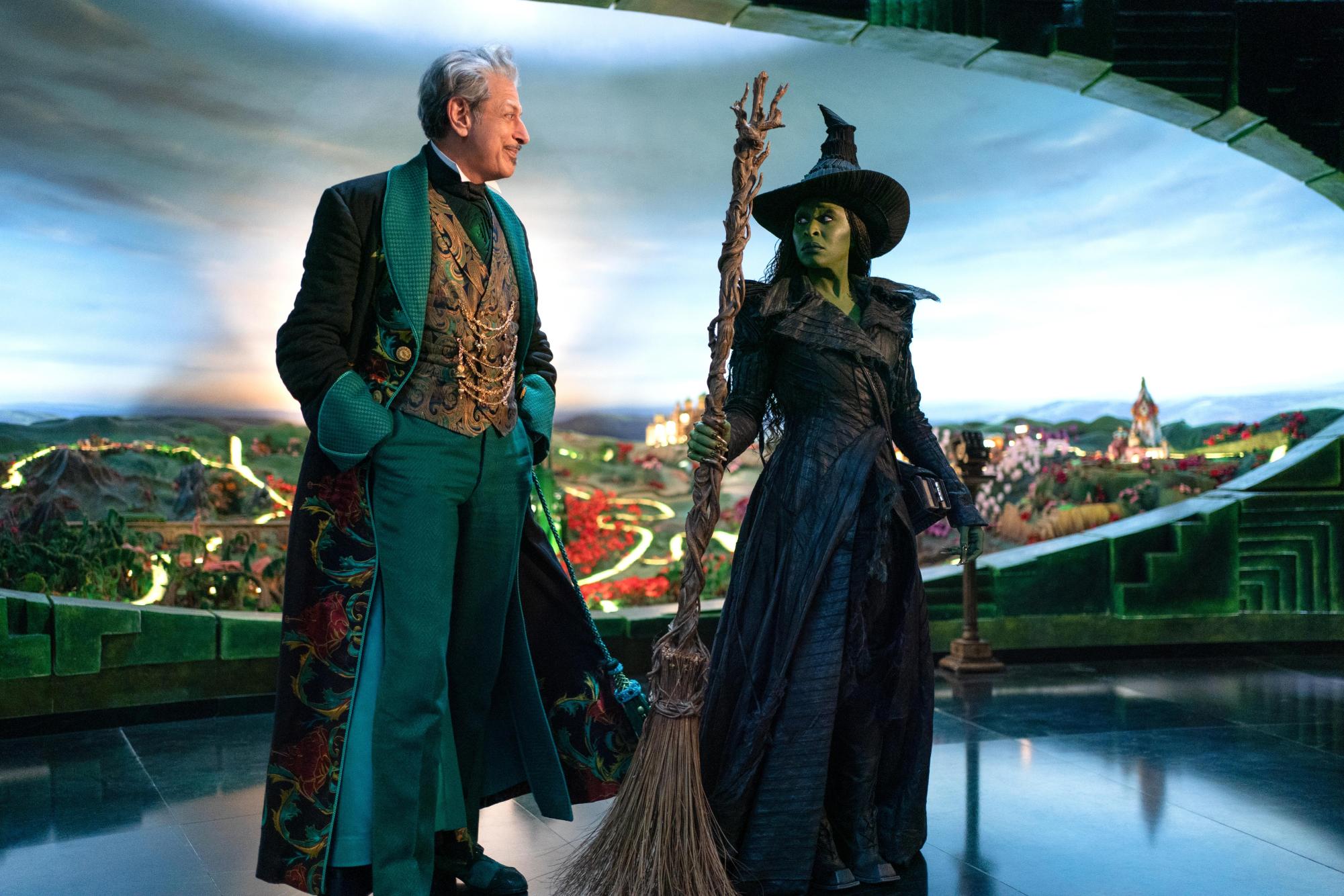
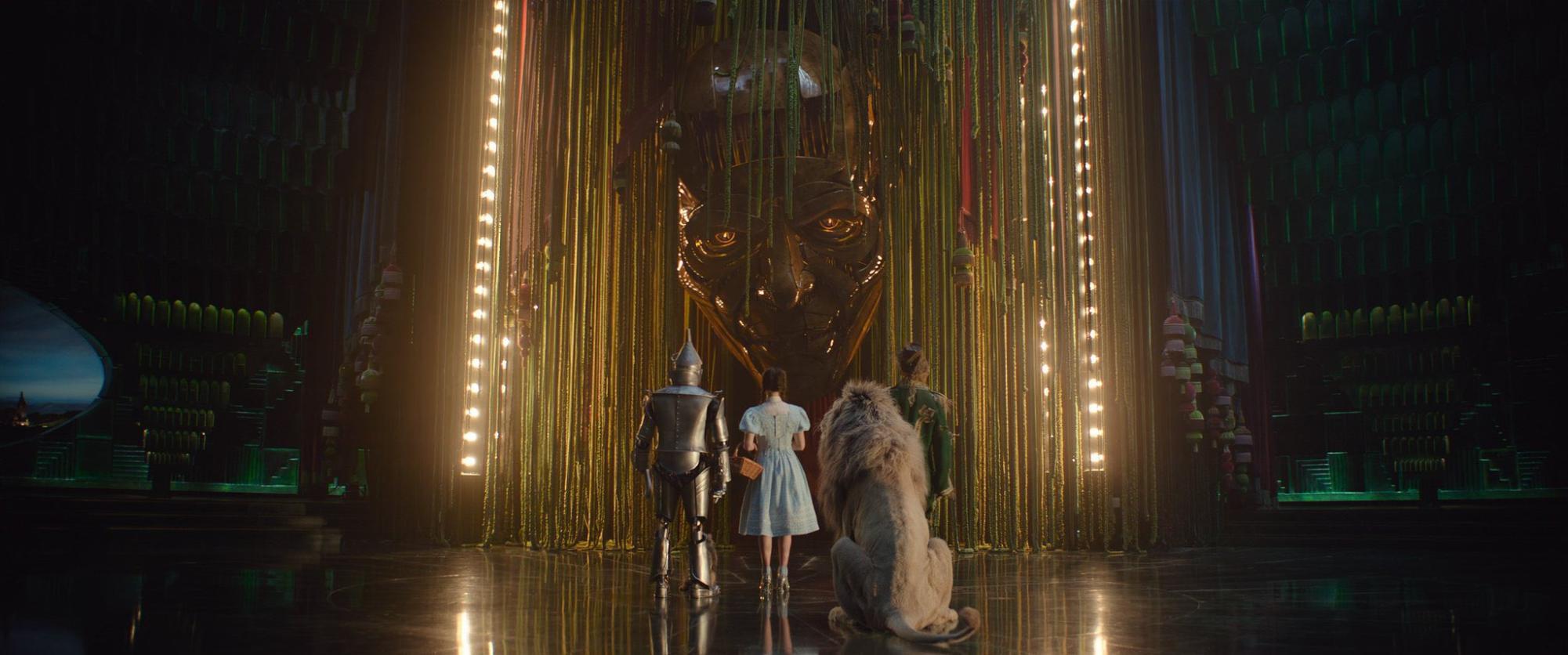
However annoying the changes and additions to this film were, Wicked: For Good was the most beautiful movie I’ve seen for a long time. Every single member of the crew who created the ambiance of Wicked: For Good—lighting, set, costumes, makeup, cinematography—did an excellent job at making Oz a world where phrases like “Wait just a clock tick” seemed natural. (Although it was annoying when Glinda said “one sec” in multiple scenes.) As soon as the film started, I was in awe of the stunning visuals. The stark yellow brick road was stunning against the empty surrounding landscape, and the pink and green color scheme of the Emerald City was to die for. The makeup artistry was excellent, including prosthetics that made the Tin Man (Ethan Slater) absolutely terrifying. Each costume, from Glinda’s purple witch gown down to the most minor ensemble member’s costume, was carefully curated to reflect who the character was.
My one qualm with the costuming is that Glinda wore the same dress for nearly the entire movie, besides her wedding dress and the iconic pink number seen at the opening of Wicked. I don’t take Glinda to be an outfit repeater. To be honest, having the same dress for almost the entire movie made me confused about the timeline. Even if the purple gown was her official uniform, wouldn’t it make more sense for her to represent the Emerald City in the stunning yet absent pink-and-green number seen only in behind-the-scenes photos? Where did the original “Thank Goodness” dress go? We’ll never know.
Additionally, every actor did such an amazing job at portraying their characters. I am in awe of Erivo’s voice. Hearing her sing my favorite song, “No Good Deed,” literally made my jaw drop in the theater. The ensemble was also a highlight. I loved catching different chorus members’ expressions as the camera panned through Emerald City, and what nuance the costume team brought to their wardrobes. Hearing them sing my second favorite number, “March of the Witch Hunters,” was incredible, especially the Tin Man’s portion. Slater was a standout in this song and the entire movie, even though he got less than 15 minutes of screen time.
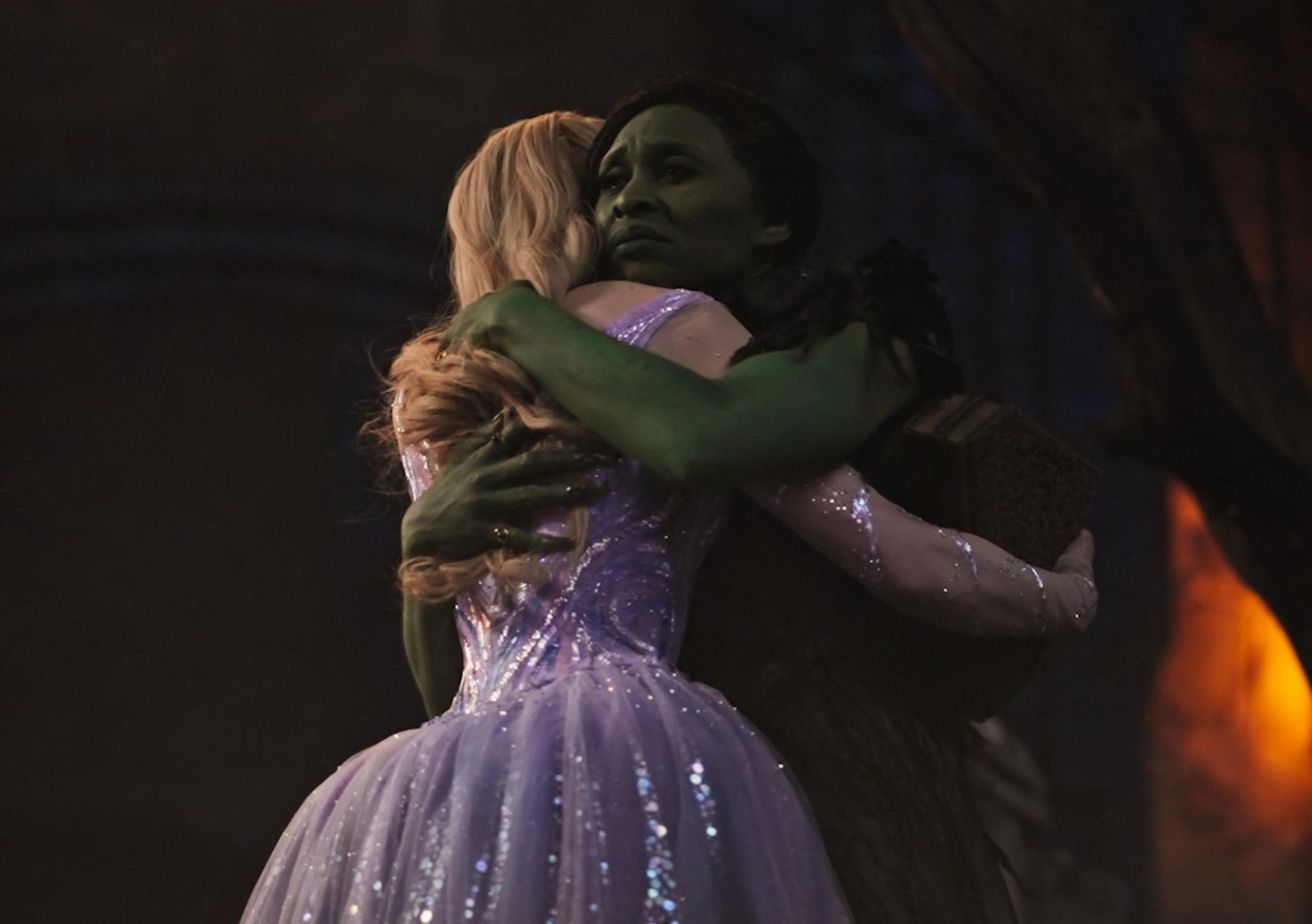
I don’t think I could review this movie justly if I didn’t address the saddening thinness of the main female cast. Let it be known that I am very anti-body shaming, but I am concerned. When Madame Morrible grabbed Glinda’s wrist and shoved her to the ground, I was worried that Grande’s wrist would snap. Unfortunately, this review is already almost 2,000 words long. I’d love to elaborate on the complexities of competitive weight loss, but that will need to be told in a later editorial.
Overall, this film was enjoyable. As obnoxious as the two were on their press tours, Erivo and Grande are treasures of talent. I was in awe of their vocals, the visuals, and the performances, but this movie could have done so much more. It could have given new perspectives that aren’t displayed in the original show; it could have added songs of substance. Instead, it relied on comfortable, droning fluff to fill its two-hour and 17-minute runtime.