

Though its predecessor is clearly superior, “How Did We Get Here?” is a charming album that showcases The Figs’ ability to experiment with folk

In the summer of 2025, renowned contemporary Christian artist Forrest Frank broke two sections of his spine in a skateboarding accident. Frank was left bedridden for weeks on end, with plenty of time to kill and nothing to kill it with other than the timeless doomscrolling technique. (And maybe being a musician, a father, and celebrating Shark Week, but that’s not the point.)
At the same time, a small Michigan folk band, The Figs, had just released the sixth installment of an Instagram series that attempted to recreate the style of a given artist. Shark Week’s victim: Forrest Frank. Perhaps in the spirit of the holiday, the duo decided to lean much farther into the parody of it all, even opening with the lyrics: “The love of God has got me clean, no Old Spice.”
On day five of Frank’s rehab journey, he stumbled upon this video and six days later released his own rendition of the song on Instagram. The two artists quickly collaborated and released an official single, “LEMONADE,” within the next week, swiftly skyrocketing the less famous of the two into (rising) stardom.
I had been a fan of The Figs for about a year before “LEMONADE,” and, as someone who hasn’t been on this earth long enough to watch an artist succeed, I was incredibly excited for one of my favorite bands. Every day, I would check their Spotify monthly listeners and practically kick my feet with giddiness as I tracked their exponential growth. Before “LEMONADE,” the band had around 40,000 listeners. Today, they sit at a spacious 1.6 million.
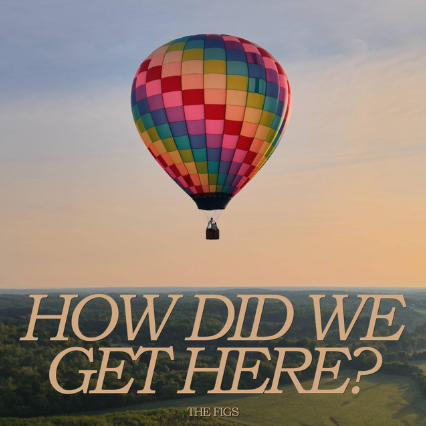
How Did We Get Here, therefore, seems a perfect name for a band that “made it” just one year after releasing their first single. I can imagine them saying this to each other at the Iowa State fair, playing in front of tens of thousands of people; I can see them asking each other this as they land their first tour. Mostly, I can imagine them wondering this aloud in a hot-air balloon, a couple of thousand feet from the ground.
I can’t say I had great expectations for this album. I am unwavering in the thought that The Figs Present: The Figs (their debut album) is one of the best folk albums of all time, so naturally, I don’t even know if The Figs themselves could top it. Upon listening to HDWGH, it’s clear that its predecessor is the superior album, but it’s interesting to see how the two differ. Though both are labeled as “Folk,” the second has a more rock sound—in some cases, making it dip precariously into the country music genre.
The album opens with a gag track called “Expectations,” a silly jingle that welcomes the listener to the sophomore album. In this track, Bailey Gillen (lead vocals, guitar) and Micah Yoder (vocals, banjo, drums) harmonize their way into the hearts of long-time fans; however, I’m not sure this gimmick would work on a new listener. Cutting off this song was “Fanfare in Db,” a 30-second guitar solo with a bit of vocalizing in the background. It felt like something they might play at a concert as their shadows were cast over the stage and they prepared to be launched from some sort of hydraulic lift. Honestly, I really liked it, but the fact that two of the songs on this album weren’t really songs was kind of disappointing. Add that to the fact that three were released as singles, and suddenly, only six songs on the album are new.
Oddly enough, each of these singles followed a pattern: a negative first impression, but an overall good turnout. When I first discovered these songs, whether on Apple Music or Instagram Reels, I usually wasn’t a fan—but hearing them in the context of the entire album made me appreciate them tenfold.
“Canary Bird” was the first single released in 2025, a day after my 17th birthday. I probably listened to this song once, not even all the way through; I just didn’t think it compared to music from their self-titled album. It’s still definitely not a favorite, but after listening to it a few more times, I’ve come to appreciate its strengths, especially the track’s climax. The grand ending showcases Gillen’s powerhouse vocals, and combined with the charming, astute lyricism, I can now say that I like the song.
The second single, “Out of Blue,” is the second collaboration The Figs have produced, as well as the better of the two. The collaborators in question, the pocketberries, are longtime partners of The Figs, in part having appeared on their debut album and opening for their first-ever concert at Taylor University. While they’ve only released four singles—”Out of the Blue” among them—they are one of my favorite artists, with simple acoustic guitar, percussion, and homely lyrics that wrap their folky songs in a little indie bow.
The chorus and one verse of this track were actually produced in just 30 minutes, with The Figs and the pocketberries posting the products of this challenge on their Instagram pages. The end result was incredible. Though I only heard a bit of the chorus, it felt like a pretty good combination of the two bands’ styles, slightly leaning a little more towards the pocketberries’.
Because this 20-second clip blew me away, the actual song somewhat disappointed me. It felt overly produced—not exactly mechanical or sterile, but not nearly as authentic as the original demo. On top of this, both Gillen and Laney Knoop, the main vocalist of the pocketberries, had their own chorus and verses in “Out of the Blue.” But because of this combination, they had to incite a considerably awkward key change in the middle of the song.
When I listened to this song alongside the rest of the album, however, I appreciated it even more. Besides the mid-song key change, it is, in my opinion, one of the more folky pieces in the tracklist. It still features acoustic fingerpicking and beautiful background vocals, as well as a fun a cappella ending that features only their voices, hand percussion, and slap bass on an acoustic guitar. Overall, the song is a fun listen that, though not necessarily perfect, still includes two of my favorite artists in the world.
Still, I can’t deny my insatiable need for an acoustic version of this track—so if a certain musician were to stumble upon this review, I sure hope they get this message.
The last single The Figs released is a sort of protest ballad against AI music: “John Henry.” Unaware that John Henry refers to an African American folk legend rather than a CEO of AI music companies, I let the allusion slip past me, and therefore, became disenchanted with the tribute concept.
Now that I’ve listened to the song over (and over and over) again, ______________.

I would never call myself a folk fan until I began listening to The Figs, but here I am, a folk fan, and free. To me, The Figs Present: The Figs was the perfect balance of folk-pop like Noah Kahan and the more experimental folk artists like Hozier.
This album is also labeled “Folk” under its title; however, listening to it all the way through, I didn’t find that distinct, earthy-yet-polished sound that The Figs Present: The Figs emulated. In fact, the album overall seemed to dip precariously into country—western country, in particular.
Now, music genres are incredibly arbitrary, and I certainly don’t disregard country music purely because of its genre, but I still missed that incredible masterpiece that the duo’s debut was.
Still, that doesn’t mean I didn’t enjoy these incredible songs. “Dynamite” emerges from the fanfare that its predecessor (“Fanfare in Db) creates within the listener, albeit with much less intensity. In a way, the track felt like a sequel to the debut’s “Death of Me,” a love song that compares the subject to a storm’s rolling thunder. Both songs have an explosive drum line to match their explosive imagery (thunder/dynamite), as well as fun, alliteration-filled lyricism. Though “Death of Me” seemed to be more of a storytelling number, “Dynamite” feels more like a testimony to the subject, comparing her to (literal) “bombshells” throughout history. In the first verse and pre-chorus, for example, Gillen alludes to Helen of Troy, who “kept painters in Greece from becoming complacent” and “[launched] endless ancient wars” merely because of her beauty.
Still, much like “Death of Me,” the main purpose of this song is not to acclaim the physical attributes of this “wild-eyed queen,” but to celebrate the fiery passion that she exhibits. ______
“Dynamite” was the first “actual song” on the album, and also my first taste of a more country sound. I largely attribute this to rock’s increased influence. They said in an Instagram post that this album had a lot of rock, more than they thought it would. The combination of the rock-like electric guitar, fast-paced banjo, volatile drums, and more pop-adjacent lyrics made the overall song lean way more into country than earlier Figs music. Additionally, the continuous imagery surrounding dynamite created a Western atmosphere while listening to the song. Multiple times, I would close my eyes to imagine a music video, and instead of imagining two guys in vintage Carhartt and faded jeans frolicing (or some other folk-y mumbo jumbo), I imagined a band in NEW Carhartt, cowboy boots, cowboy hats, and a piece of straw held between each musician’s teeth.
This western vibe is also displayed in “Outlaw,” even though the character is stated to be in Midwestern Kansas City. Still, references to wanted posters, a shotgun, and the general theme of running from the law (all before the first chorus) are pretty indicative of the American cowboy archetype, fully solidifying a country-like theme. On top of this was a very clear harmonica, which, again, blended with other country-associated instruments to contribute to this western atmosphere.
I mostly appreciate this song for its character-driven songwriting, which was consistently used in many of my favorite tracks from their debut. This one was more of a fun, upbeat tune than deeper songs such as “Kamikaze” or “East of Eden,” but it was still an enjoyable listen.

I am and always will be a sucker for biblical undertones in music. I listen to a great deal of religious lyricism—Father John Misty, Bob Dylan, Annabelle Dinda—so it has become one of my favorite rhetorical choices in songwriting.
And no one does it better than The Figs.
“East of Eden,” a song recounting the aftermath of Cain and Abel’s story, has been a longtime favorite from their debut. Especially combined with character-driven narratives, these religious notes make themes like guilt and spiritual yearning much more impactful. Because of this, I was incredibly excited to see some good old biblical lyricism on the new album.
”Cumberland Gap” was the song I was looking for. Though it was laced with cowboy jargon and an even more cowboy banjo, the song recounts the life of the Apostle Paul, from his early repentance to his late missionary days. What’s especially cool in this song is how its themes are intertwined, especially in the chorus. “Sling on his back not a nickel to his / Last name / just a few hymns and a voice he swears he’ll / Find someday” is reminiscent of both the adventurous nature of Manifest Destiny America as well as the anti-materialistic notions held in Christianity.
Another great folk number was “Thank You Now,” a very cute story about a California 49er who fell in love. The track is more down-to-earth, with a less-clean vocal line and plenty of banjo, adding to the folk charm. It’s a much clearer example of Western country themes because of the gold-miner element and, in the context of the album, shows just how The Figs can intertwine themes from Western frontier, midwestern, and even biblical cultures to create a dynamic folk album.
With the remaining two songs experimenting with a variety of techniques that are typically avoided in folk, it’s really cool to see how The Figs played around with this album. The second, and final song in the album, “Time or Day,” actually experiments with sampling, using a sermon to underscore the song’s lyrics. As the sermon builds in intensity, so does the arrangement. Both these words and the music become a lesson for the listener, urging them to wait, with patience, for the “Time or Day” that this song anticipates, even if it is entirely unknown.