




















For the purposes of this article, both STEM and STEAM refer to the same general field of hands-on, science-based learning.
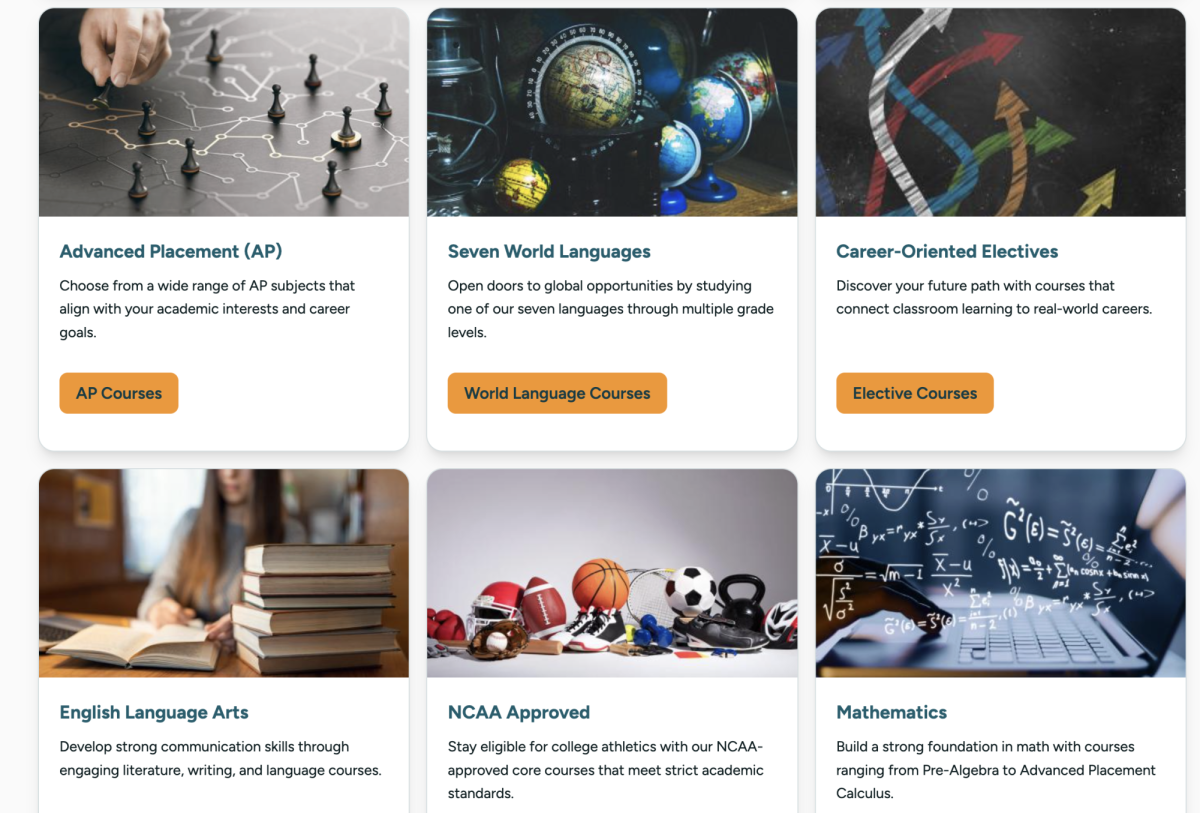
Beginning next school year, FHPS will no longer offer world language for students in junior kindergarten through sixth grade. This will not impact the Spanish and Mandarin Chinese language immersion programs, which will still be offered at FHN.
A letter sent out to FHPS staff members states that, in the place of language, “all elementary students will participate in a STEAM (Science, Technology, Engineering, Arts, and Mathematics) program.” This will be taught through Project Lead the Way (PLTW) curricula.
Assistant Superintendent for Instruction Scott Haid is at the forefront of this development.
“If you want an experience with world language, we do have the two immersion programs,” Haid said. “Those are still an option. So, if you are a family that’s committed to world language, there is a pathway for you. Many of our families have a desire for that engineering, training, technology—sort of that hands-on experience… And so the decision was made to move forward with that type of experience through STEAM.”
The choice was made largely because of FHPS families. Through various surveys, many have shown that they value a STEAM education for their children—something that hasn’t been offered to our younger students.
In addition, STEAM pairs well with the revamped ELA curricula. In 2024, the state of Michigan finalized new standards for K-12 literacy, following significant dips in test scores. These new standards are based on the science of reading and require more time to address.
Naturally, STEAM will blend nicely with FHPS’ traditional science education. Haid anticipates that, for K-2, science standards will be fully integrated into the STEAM program. It will likely be similar for older students. This summer, the administration will assess what standards, if any, will need to be supplemented with the STEAM curriculum.
The integration of traditional science and STEAM will free up more time for elementary teachers to focus on ELA. Haid looks forward to how the program will benefit young students.
“What I’m envisioning are more hands-on opportunities—more of that science-y, math experience at a younger age—and the ability to apply some of that knowledge, as best as a kid can,” Haid said. “If you’re getting those foundations, hopefully we’re generating maybe an interest or a passion at a younger age for students…The thing about young children [is that] they’re naturally curious.”
There’s an active pilot taking place at Meadow Brook Elementary School right now. According to Haid, it’s been amazingly successful. They’ve been experimenting, building bridges—that sort of hands-on learning. Some CMS students are receiving a similar experience, covering topics like green architecture and flight and space. The administration has been gathering feedback straight from the kids.
However, the removal of world language in all places besides FHN’s immersion programs is a price that FHPS will have to pay.
“It’s difficult because world language has served us so well in this district,” Haid said. “Those teachers are amazing [and so were] the things that they were able to do with students. It was just a difficult decision that we made. Moving forward, kids can still have that opportunity for [learning a] language. I look at it as we’re gaining an opportunity with the STEAM [program].”
Haid emphasizes that we have not “lost” world language. Starting in 7th grade, students can take language classes. CHS, for its part, currently offers Spanish and French. While not a “world language,” students have the opportunity to take American Sign Language as well.
Laurie Van Houten teaches French at the high school. Naturally, she classifies herself as a “language person,” and she’s a strong advocate for kids to learn a world language. She sees FHPS’ move toward STEAM as reflective of the United States itself.
“Our country as a whole right now does not see language as something that’s needed or a priority,” Van Houten said, “which makes me really sad because those of us who know more than one language understand what an amazing superpower it is. I mean, it’s a superpower in the United States. It isn’t anywhere else [because] everybody [speaks multiple languages]. It allows you to make connections that you cannot make if you don’t speak the language and know the culture. And I know people say, ‘Well, you know, you can just use a translator.’ It’s nuts. It’s not the same thing. I think we have plenty of STEM stuff, and I think that we are really lacking in language.”
Given her strong support of world language, Van Houten’s response to the removal of JK-6 world language is surprising.
“This is probably not what you’d expect, but I was absolutely okay with [the removal of world language for K-6 students],” Van Houten said. “Language is phenomenal, but we’ve never been able to do it successfully in the elementary schools, outside of immersion. What you ended up with was great teachers who didn’t have the tools necessary to make it work well. I think they had kids for one hour at a time, which is way too long, once a week. So, they were never able to get [the students] to progress. There was not really, in the end, any educational value to it. Not because of the teachers, but because of the way it had to be taught in this district.”
By seventh grade, kids should have been at the “Spanish 2” level. This didn’t happen. Instead, in seventh grade, students were again offered a “Spanish exploratory” course. In the words of Van Houten, “You’ve been exploring Spanish for seven years—why do you need a Spanish exploratory?”
Van Houten worries that FHPS will soon narrow its world language offerings even further—that this is just one step in a gradual process of eliminating the very subject she’s taught at FHC for 38 years.
“Diversity is really important,” Van Houten said. “I am really fearful that we’re going to end up having only Spanish as [the] traditional language in this school district. And a premier high school does not have one language… Is that where we want to be? Go STEM, go science—it’s great, but there is no one subject that should be or is more important than another… because it depends on the individual’s brain and interests. So to say, everybody has to have STEM because we must do STEM, [how] is that any different than saying everybody has to have Spanish?”
Similar to Van Houten, CHS Spanish teacher Carlos Silvestre is a strong believer that kids should learn another language.
Silvestre, however, feels that taking away language at the elementary levels will be a significant loss. He hopes that students will have fresh interest in Spanish when it is offered to them for the first time in seventh grade—something that could grow the world language program. Though even if this happens, he predicts that future students will be at lower levels of fluency than current students are now.
“The studies have shown that when you learn a language, you become more knowledgeable about many things, and it helps you learn [in] other areas,” Silvestre said. “It improves your cognitive abilities—it is proven. That research is out there. I think parents should still think about… finding ways so that their kids can learn [a language]. Maybe they’re not going to [become] fluent, but, you know, at least be exposed and have the benefit of having a young child engage in a language.”
While he didn’t see a need for more STEAM education, he acknowledges that he cannot speak to the advantages or disadvantages of the program.
“I think the sciences are obviously important,” Silvestre said. “I probably would have been more on the side of doing a curriculum study and seeing what elements we can implement in our teaching of science, which is not bad. Our kids have proven not to struggle or [miss] the [science] targets. Why not maybe look at things from a different perspective and revamp the programs that we have instead of taking away the languages?”
As of next year, students will gain more hands-on, experiential learning. This will hopefully check the box for many FHPS families, integrating STEAM more fully into our district.
The larger impacts this will have on world languages are uncertain.
“We’re always trying to figure out what ‘better’ would look like here in Forest Hills,” Haid said. “And we’re trying to listen to not only our students, [but] listen to the community [and] teachers. Inevitably, when you do make a decision, not everyone’s going to agree with that decision. But you try to make as many people happy as you can. You have to believe in what you’re doing—is this the right decision for kids? And I really believe that this is the right decision for kids.”
