




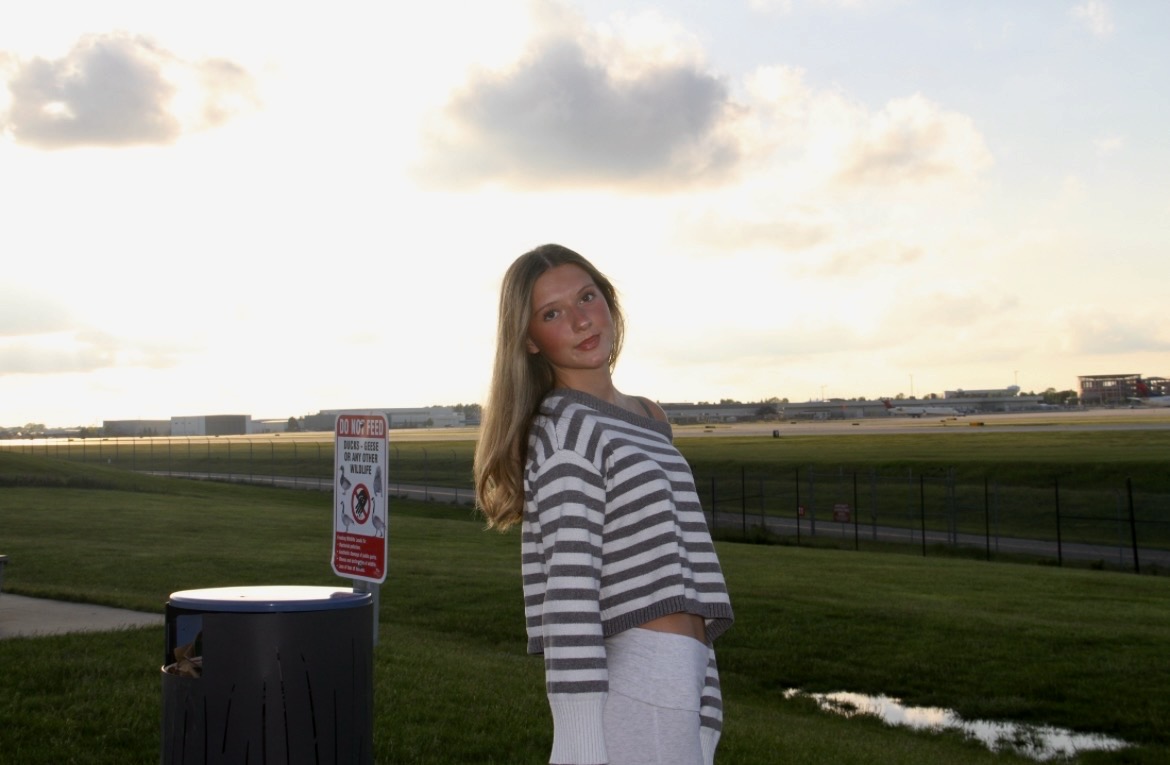







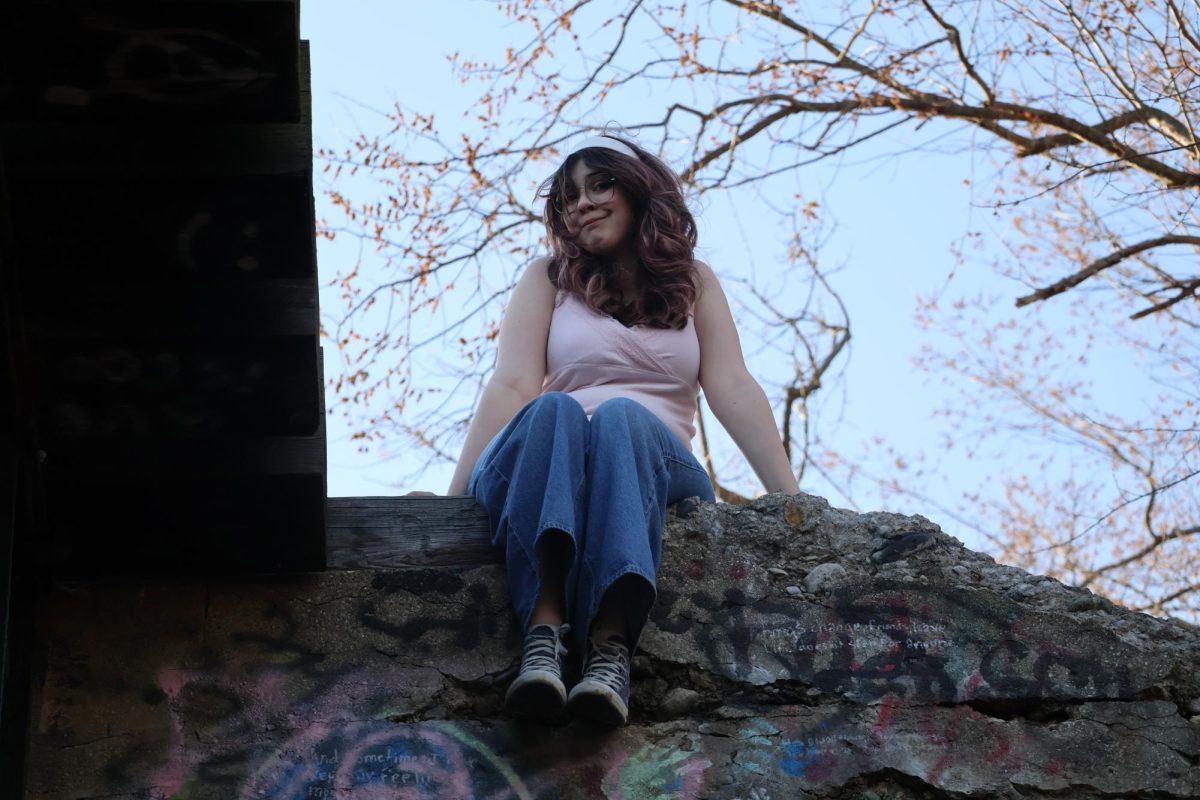
While the COVID-19 pandemic was a catalyst for numerous short-term hobbies in many individuals—whether it was gardening, cooking, or doomscrolling—for junior Elizabeth Vorel, lockdown presented her with a unique interest that would continue into the present day: animation.
“When I was in quarantine,” Elizabeth said, “I watched a behind-the-scenes of how the Frozen movies were made. Watching how the process works—how people make movies and animations—I fell in love with it.”
Although her love for art blossomed with Arendale, Elsa, and Anna, Elizabeth’s fascination didn’t remain isolated to fantasy worlds for long. As she continued growing up, her early interest in art carried into a sustained relationship that has allowed her to experiment with varying mediums and explore numerous opportunities for creation, finding more consistent, intentional styles than ever before.
“I feel like most kids gravitate towards making art,” Elizabeth said, “but I really stuck with it. I started taking classes for art when I went to Kendall [College of Art and Design] in second grade, taking pottery classes there every week. Since then, I’ve been building off of that [experience]. This summer, I’m doing an early college program at the Art Institute of Chicago, taking a graphic novel and alternative comics class. I primarily draw and do digital drawings, but I like messing around with different mediums of art. I like to paint, I like to do sculptures, even taking photos of my sculptures and then drawing on them digitally or turning them into a collage. I want to be doing something where I’m still able to be extremely creative and work with a lot of people, expanding people’s knowledge of art.”
As her relationship with art developed, so did the role it played in how she approached more personal ideas. In her Advanced Placement (AP) Art and Design class, her sustained investigation—a 15-image portfolio created through an inquiry-based exploration of a specific question using practice, experimentation, and revision—has allowed her to express herself with greater depth while expanding into new artistic forms.
“My [sustained investigation] was on how people recover from mental health issues, like distress and depression, and how people go about experiencing it,” Elizabeth said. “It’s something I’ve experienced in my past, so I thought it’d be fun to do, because drawing has always been a good coping mechanism for me. I’ve been really getting into just using more of like a comic book style, but also like using lots of like pastels and like frames and very cutesy styles.”
Even as she emphasizes the creative possibilities within animation, her perspective also gestures toward what she believes should be preserved within the form.
“I think animation is a really great medium of art,” Elizabeth said, “and I feel like it’s often overlooked. A lot of companies, like Disney, have started slowly losing some of the traditional style of animation, and they now use the same base model for all of their films. I really like the [traditional] style that a lot of anime and other animated TV shows like Adventure Time are still keeping, where [the animation] is sketched first. I think that’s really what drives me to potentially go into animation. My dream is to work at Leica, a stop-motion company [that] physically makes puppets and spends hours making the designs.”
As her ideas about creativity and originality come into focus, they also connect to broader concerns about the future of art. Those concerns emerge primarily from the growing role of Artificial Intelligence (AI) and how it should be harnessed in art.
“AI should be amplifying art and not taking away art,” Elizabeth said. “We’re advancing AI, and we’re using it to make creating art easier, but people shouldn’t have to avoid creating or making art just because they’re scared of AI. I do think it’s very disheartening and really sad that AI has advanced to a point where it’s now harder than ever to get into these industries. But, even though this is happening, it is so important for us to continue to prioritize creating art.”
While her work continues to expand across styles and subjects, her interest in animation has remained consistent over time. This throughline emerges most clearly in the preliminary stages of her work, where rough visual planning plays a central role. It is within these early, unpolished moments that her approach to animation and creation takes its most profound shape.
“Since I was little,” Elizabeth said, “my dream has always been animation. When you’re making an animation or a film, you have to make a storyboard. Making storyboards is great because you don’t have to worry about it being exactly perfect. They’re the roughest draft you get of an animation. You can be messy and imperfect.”