
















For nearly a decade, Forest Hills Central’s English 10 students have participated in a long-standing tradition: delivering an amateur TED Talk-style presentation. For nine years, the assignment has served as a cornerstone of the curriculum, challenging students to share ideas, experiences, and passions through public speaking.
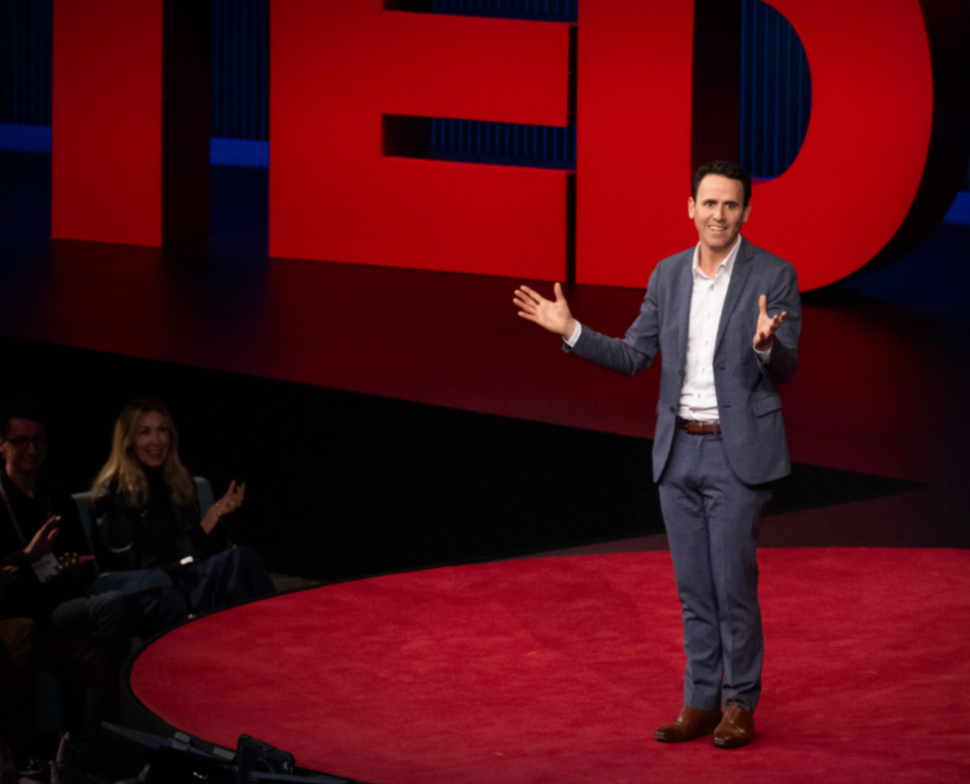
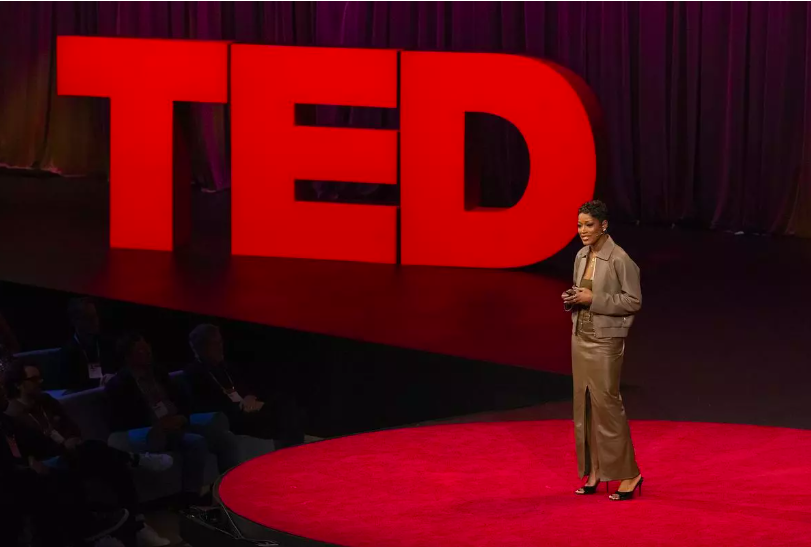
The tradition is inspired by TED Talks, which originated in 1984 as a conference centered on technology, entertainment, and design. Created to bring people together around innovative ideas, TED expanded its reach in 2006 by making presentations available online for free. Today, TED Talks are recognized worldwide for encouraging learning and the exchange of different perspectives.
Although the school’s TED Talks are not officially affiliated with the TED organization, the project has become a significant part of the English 10 experience. For many students, it is one of the most anticipated assignments of the year. However, during the 2025-26 school year, several notable changes were made to the presentation format.
English teacher Anthony Sultini, who teaches Pre-Advanced Placement (AP) Seminar, Sports Report, and Senior Literature, has reported that adjustments were made to better align the project with the school’s evolving Pre-AP curriculum. Among the changes are a reduced presentation length, shortened from three to four minutes to two to three minutes, a restriction limiting access to the TED Talk room to only Sultini and his students, and the discontinuation of the long-running FHC Inspires tradition that had accompanied the project for many years.
“I try not to make too many changes,” Sultini said. “I try to keep this consistent for the sake of the students. So that way, students know what to expect, and [I] also try to be fair. It’s one minute shorter, and that’s not necessarily fair to students in past years. But what [Pre-AP students] do get is still the opportunity to get up in front of an audience in a semi-professional atmosphere…They’re not major changes, but they are components that make [the TED Talk] unique in a way.”
While the shortened time limit and removal of outside audience members have drawn attention, the most significant change happened behind the scenes. The transition from American Literature, honors, and regular English 10 to Pre-AP brought new curriculum requirements that altered what students are expected to learn and demonstrate. As a result, teachers were forced to reevaluate the role of TED Talks within the course and determine whether the project still aligned with the class’s academic goals.
“A lot of things have changed because of going from American literature to Pre-AP [Seminar],” Sultini said. “The curriculum is completely different. In fact, [the Pre-AP teachers and I] shouldn’t even be doing a TED Talk. We should not have even done an argumentative speech because [the curriculum] didn’t call for that. So, the other two teachers and I, [who teach Pre-AP at the schools in the district], we kind of went lone wolf.”
Among the changes made this year, the audience policy has been one of the most noticeable. By limiting attendance to students enrolled in the class, the revised format has changed how students experience the public speaking aspect of the project. For current Pre-AP sophomore student Jonah Kriekard, this new rule has particularly stuck out to him.
“Last year to this year, Sultini made it so that no other classes could come in and watch [the TED Talks], and it is just [the classes],” Jonah said. “So I guess for some kids, they’ll like that because it’s a smaller crowd, but other kids also want that big crowd just so they’re comfortable later on in life when they do [presentations].”
The smaller audiences have created a different presentation environment than students observed in previous years. Rather than speaking in front of multiple classes, students now present only to their classmates and teacher. While some view the change as a way to reduce stress and create a more comfortable setting, others believe larger audiences better reflect the public-speaking experience that has long been associated with the TED Talk tradition.
“I like [the new rule] just because it is people I know [watching], and it’s not random kids walking in,” Jonah said. “But I feel like it would be more beneficial to have a bigger crowd. [When I watched last year] there were probably five classes in [the lecture hall], and some of the kids looked a little nervous, but then others looked comfortable in that kind of situation.”
The change in time limit has been a big discussion among the students this year; the audience restrictions have also affected students who enjoyed watching TED Talks, like students such as Pre-AP student Guene Kimber Keene. With no opportunities to attend presentations outside their own class, students have missed hearing a wider range of topics and speakers from other classrooms.
“I also really enjoyed seeing the TED Talks before I was actually making [one] myself,” Guene said. “I have friends who are in other classes that I would really, really love to see them talk about things that they’re passionate about, and I just don’t really get that same chance this year.”
While audience restrictions have changed who students can share their presentations with, the shortened time limit has affected what students are able to include in their speeches. With presentations now limited to two to three minutes, students have had to make sacrifices to condense topics they are passionate about.
“For me, [the TED Talks] have been pretty fun; I really enjoy public speaking,” Guene said. “I’m a poet, and so I’m making my TED Talk about how poetry is underrated. But, the one thing that I am the most scared about is that my TED Talk is going to go on too long because the time has changed, so it’s a lot shorter now. If I wanted to, I could make this TED Talk an hour-long rant. Shortening it down to five minutes was pretty easy, but now, down to three, it has been a little bit more difficult.”
Although students have expressed mixed reactions to the new implications added to the TED Talks, many changes were made to ensure they could remain part of the Pre-AP curriculum. Because the updated course requirements no longer specifically called for a TED Talk, Sultini and the two other teachers across the district were forced to make adjustments to the project in order to fit within the new academic framework. Changes such as the shortened time limit and the attendance were compromises that allowed the tradition to continue despite the curriculum shift.
“I thought that it was important to have another formal speech,” Sultini said. “Nowadays, there isn’t a lot of conversation to be had because of social media and stuff like that, I believe. And so, [conversation] is one of those important things, eye-to-eye conversation. And that’s a lost art sometimes for some students.”

Daniel Gascon • Jun 3, 2026 at 9:16 am
Ah, at least FHC Inspire was fun while it lasted. I wish that these voices could still influence the community.