



















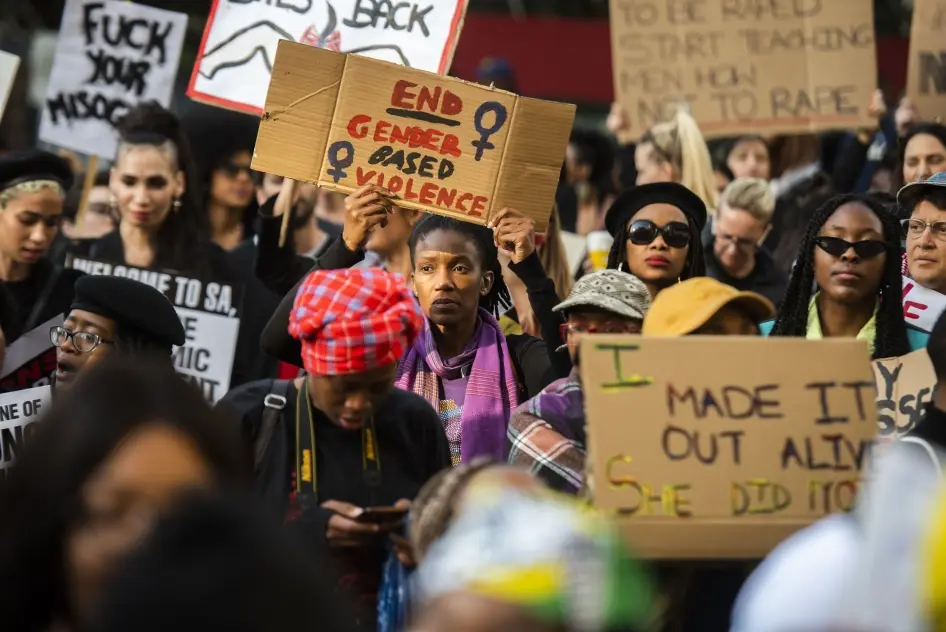
On Nov. 21, the women of South Africa stopped. They ceased all labor, paid or unpaid, and pulled back from the economy. The shutdown was not the only protest. During the G20 in Johannesburg summit, a forum for leaders of several of the world’s largest economies, women protested outside the building.
A particularly notable protest occurred at noon, when women across the country laid down in the street for 15 minutes to honor the 15 women killed every day in South Africa (BBC).
They did this to show their government how important women are to the country and its economy, and that the country needs to take serious action surrounding the gender-based violence and femicide (GBVF) epidemic in South Africa. Femicide is gender-based murder, typically of women.
In South Africa, on average, every day at least 15 women are killed and 117 rape cases are reported. In 2024, 42,569 rape cases were reported, and the number of rape cases is likely much higher since an estimated 95% of rape cases in South Africa go unreported (Women For Change).
These numbers are simply horrific, and action is needed. Women for Change, a nonprofit organization, spreads awareness of GBVF through social media, protests, and petitions, and has advocated for the South African government to declare GBVF a national disaster.
Gender-motivated violence was declared a national crisis in 2019. Declaring GBVF a national disaster allows more resources to be put toward GBVF and more specific policies. Overall, the hope for GBVF becoming a national disaster would be that more urgency and attention are brought to the topic from the government.
Women For Change wrote a petition to the government to declare it a national disaster. The petition amassed over 150,000 signatures and was turned in to the government in April (Women For Change). The request that South Africa fund support for women in South Africa is not limited to the country’s citizens; endorsement for the cause has happened around the globe.
On social media, the purple profile movement has spread. Social media users from all around the world, from ordinary people to celebrities such as R&B singer Tyla, have been changing their profile pictures to purple to show their support for the women in South Africa and their fight against GBVF.
Besides people having empathy, one of the reasons the movement has gotten support from all over is because the gender motivated violence crisis is not unique or specific to South Africa; it’s worldwide. Women from every country are frustrated with the continuing epidemic and want to support women trying to make a change in an impactful issue.
Violence against women is an issue everywhere on the planet. South Africa has been taking long-overdue steps to address the epidemic, but this too-common issue should be seriously addressed in every country. While in every place that might not mean being called a national disaster or other strong reforms, the issue deserves attention to try and help prevent more women from enduring GBVF.
Too many women every year fall victim to violence based on gender. No one, no woman, deserves that. Almost one in three women has endured violence, either physical or sexual, from their partner (UN Women). And that number does not even include victims of sexual harassment, and it’s likely that when adding in sexual harassment victims, the number is much higher.
If you don’t care or don’t have empathy for GBVF victims, I highly recommend you go to Women For Change’s website and check the “Unburied Casket.” The unburied casket is a feature that showcases the lives and cases of many victims of gender-motivated violence and tells their heartbreaking stories. Each of the seemingly endless number of GBVF victims matters. Their stories matter. It’s their stories that have brought the change, and it’s their stories that will keep bringing change.
Aleta Miller, UN Women representative in South Africa, says it best about the gender motivated violence crisis, stating, “They are mothers, daughters, sisters, friends—whose lives have been cut short or forever changed. Ending gender-based violence and femicide requires nothing less than a comprehensive, all-of-society approach” (UN Women).