















Few classes set students up for success once they’re out in the real world; students learn the rules of mean, median, and mode, but not always the skills that will actually prepare them for real-life experiences, especially when it comes to money. The Forest Hills Charitable Investments is one step to providing these useful skills to students in a unique real-world setting.
The investment club is now about three years old, with senior Frey Wu as the initial member and club President. There are many parts to the club, all working together to make it what it is.
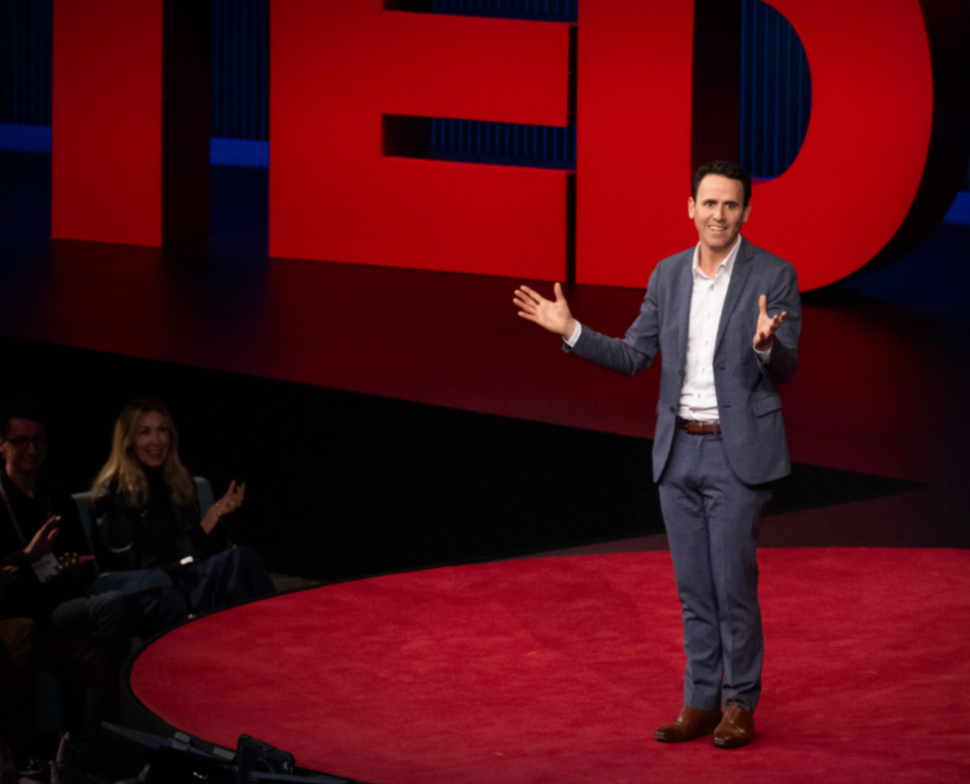
“There are three parts to what we do,” Frey said. “The first part, and I think our most important part, is education. We get new members, and we spend a couple of months giving lessons on how to pick stocks, how to figure out which stocks are good and bad, and what metrics to understand a good stock. So that’s like the financial literacy part. The next part, I would say, is like charitable giving. So at the end of each year, we donate a portable portfolio to charity. Last year, we donated $2,500 to Kids Food Basket. Then the last part is volunteering. We will go to Kids Food Basket and volunteer with 15 to 20 people.”
The club is definitely a lot of work, but it pays off. It is mostly student-run. The advisor is Advanced Placement (AP) Pre-Calculus and AP Statistics teacher Rebecca Lipke. Lipke is lucky because most of the work is cut out for her in terms of advising. Frey and other members take charge and run most of the activities and tasks, leaving her to sit back and deal with the larger matters, such as paperwork.
“The advisor for a club is just basically supposed to be the person who oversees stuff,” Lipke said. “I try to make it as much student-led as possible. So they literally run it all. They do everything. They plan the lessons. They plan what they want to talk about. Really, all I have to do is help if there’s some paperwork for things that they need to do, or something like that, but I just come and sit here and make sure that things are going smoothly.”
The class is very involved and developed, but it has also changed a lot. Originally, when it was started, they were dealing with a situational stock market. The members were a part of a global competition of dealing and managing stocks, where they even made it to the semi-finals. Yet, as the club grew, they began a new idea: working with real money. It was definitely a process, because it’s not really realistic for adults to just give up money for teens to play around on the stock market. As they brainstormed, Lipke and the members were able to create their very own non-profit for donations to the club. They started with donations from friends and family, and now get donations from all different types of people and companies. With these opportunities, they not only give back and donate, but they also get real experience with the stock market.
As expected, not everything is great for the club. When dealing with the stock market, things won’t always go as planned. One of Frey’s least favorite parts is when they have to deal with losing money.
“The way we do it is we pick individual stocks, and we don’t pick baskets of stocks and ETFs, like your parents might do,” Frey said. “You have a high likelihood of losing a lot of money on a lot of these stocks, because you’re not very diversified. You’re taking on a lot of risk by just investing in individual securities. So it’s really frustrating when you lose money, but you have to be confident in why you bought that stock, and you have to make sure that it wasn’t something that was your fault and something that you just hadn’t anticipated.”
Even with the potential of losses, the group is very involved and appreciated. It has grown a lot, with applications to be a part of the club sent out before each semester for participants. They want to avoid people just coming and find people who are willing to put the work in, even if it is outside of meeting times. They want to be able to be fully successful and understand their stocks, especially since it’s real money they are dealing with.
“It’s not just kind of a sit and watch club; they want you to be watching the market, and they want you to be analyzing things,” Lipke said. “They teach you how to do this, and they like you to have opinions about different companies in different areas to invest in, because ultimately, at the end of the school year, the goal is to take a decent chunk of the money that we have and donate it to a charity of their choice.”
Junior Emily Crosse was automatically immersed in Charitable Investments. Her older sister, former FHC student Josie Crosse, was one of the original members and has given Emily a lot to live up to. Along with that, it has given her a front-row view of the changes and growth of the organization.
“Because my sister started the club, I kind of was already introduced to it when I was a freshman,” Emily said. “So that kind of already gave me a leg up in it. It was a pretty small club when I first started.”
Emily is the Executive Volunteer, giving her the position of managing the volunteering aspects and opportunities, which is her favorite part. It shows the side besides the stocks and investments of working with the community and for a cause. Her favorite volunteering activities include going to Feeding America with her sister and some of her friends. Beyond the volunteering and stocks, the Investment Club builds a community to meet new people and bond, and gives other life skills when planning, presenting, organizing, and time on their projects.
“[One of the skills that is gained from Charitable Investments is] presentation skills for sure, like giving presentations, listening, [and] being engaged,” Emily said. “I also think working in group settings and making those kinds of connections is super helpful, too.”
Overall, the Investment Club is a very valuable and important club at FHC. Central was the first high school in Forest Hills to have an Investment Club in this format, but it is now spreading to the other high schools as the importance is being recognized. Lipke even feels that it should be transferred into a class because of how much could be accomplished in an hour a day, compared to one meeting every other week. Overall, the club is a group of responsible and intelligent students who are learning life skills and teaching others as well, impressing teachers and other people throughout the community.
“I sit there during their meetings, and I look out at all of the kids in there, and I listen to what the leaders are talking about, the kids’ questions, and the stock pitches that they do, and I am just in awe of how knowledgeable so many of them are,” Lipke said. “It’s just as a teacher and somebody who’s worked with kids for so long, it makes you so proud. Even though I didn’t really have anything to do with it, I’m just being supportive of them, like it’s just awesome to see what they talk about, what they know, and how they’re trying to teach other people the knowledge base, and the brain power in that room is immense.”
