


















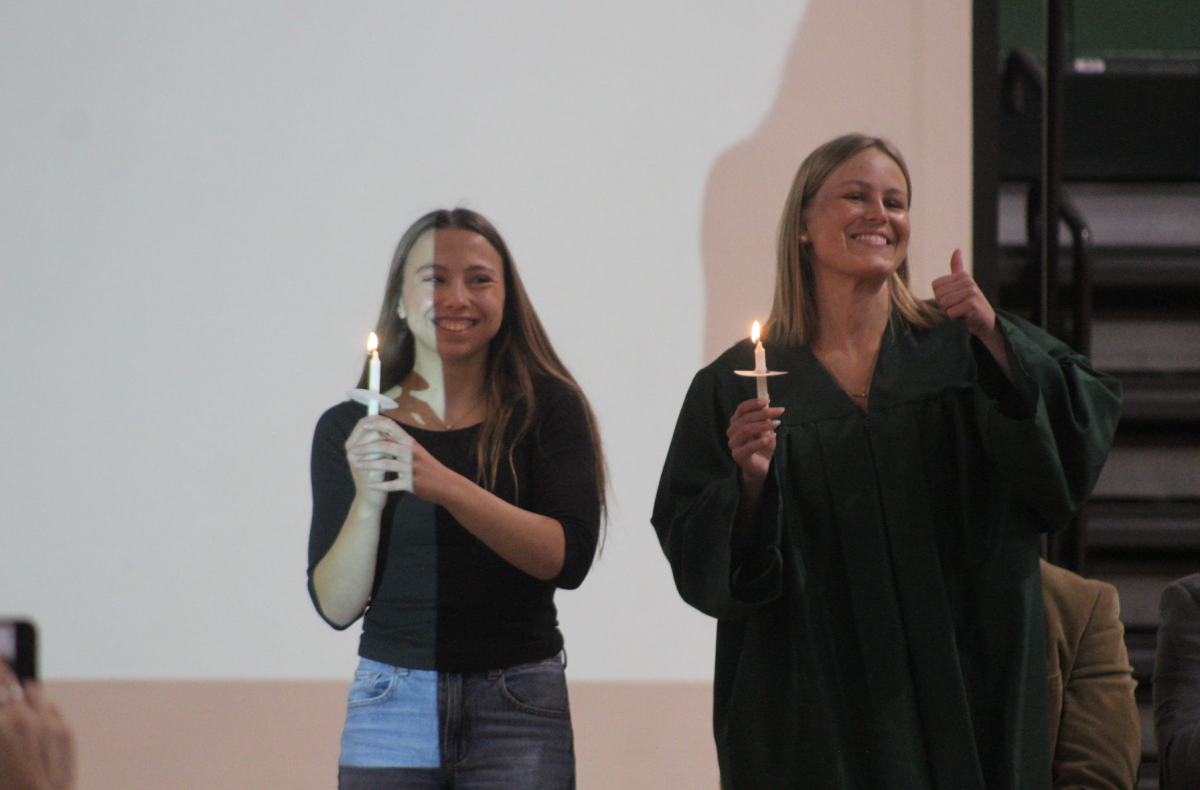


Last Monday, FHC students were herded through four different assemblies to kick off second semester. For seniors—myself included—most of the information presented was similar to what we’ve heard in the past. The sessions focused on topics like school spirit, future planning, and appropriate school behavior.
However, one particular phrase highlighted by principal Jonathan Haga—“The lowest accepted behavior becomes our school culture”—stuck out to me. Sitting in the spacious auditorium, surrounded by the Class of 2026, I began to contemplate what this meant for our school.
There will always be “low” behavior in some form. Inevitably, in virtually any group brought together by happenstance, there will be people who couldn’t care less about those around them. Ones who won’t make an effort to better their surroundings. Does this mean our school culture is a lost cause?
I don’t believe that’s true. But shaping a culture means actively taking responsibility for it—not merely listening to administrators tell us about our potential to lead.
Upperclassmen in particular have the power to change our school culture. Junior class president Eliza Zorn emphasizes the role that juniors and seniors play at FHC.
“When I was younger, I definitely looked up to people that were older, how they were talking to people, and who they were talking to,” Eliza said. “I think it’s important that the upperclassmen understand their impact. I just feel like a lot of people don’t understand that you’re not just affecting your class, but you’re affecting other classes because underclassmen are taking in what you’re doing, and [the behavior] is just going to continue if it’s negative.”
The upperclassmen set an example of community for the lower grades. Being a junior or senior isn’t quite like it was in High School Musical. Yet undoubtedly, these classes are more united than they were at the beginning of high school.
At last week’s assemblies, sophomore Disha Sriram noted the difference between her class and the senior class.
“During the time when we were all in the theater for the presentation [with] Mr. Haga, all the sophomores were kind of sitting in the back row,” Disha said. “But he told us that all of the seniors were seated together in the front as one big group [earlier in the day]. And we were kind of surprised to hear that. Because obviously, all of us aren’t a big friend group [or] class community. I think that that’s a really positive thing that the upperclassmen do that a lot of underclassmen can learn from.”
Eliza emphasizes that the bond of the junior class has only been possible because of the length of time that they’ve known each other.
“I feel like everyone’s like, ‘Oh, I wish [our class bond] started from when we were freshmen,’” Eliza said. “But I think that as the years go on, you build the bond and the trust with your class, and then that’s how you get there. I think another big influence on that is seeing those upperclassmen in the bond that they have and how they all respect each other—well, hopefully everyone respects each other. That’s how people look up to [the upperclassmen], and that’s how we create that good.”
However, class unity isn’t just the students’ responsibility, and its process could likely be expedited. The FHC administration plays a part, as they have the ability to work with students to plan class-wide events and create a collaborative environment.
Disha believes that more class time should be allocated for students to get to know each other. Many students’ schedules have changed from first to second semester. Despite this, few of her teachers have created space for any “get-to-know-you” activities. Even during her freshman year, she felt there was a lack of structured opportunities to connect with her peers in class.
The majority of each class at FHC has been together since before middle school. However, Disha points out that knowing someone in childhood is not the same as knowing them in their teenage years.
“People [can be] really closed-minded,” Disha said. “When you come up from middle school to high school, people don’t let go of any prejudices [they] had in middle school. People tend to think you’re the same person from 6th grade to when you’re a freshman in high school. Your personalities, your hobbies, everything about you could have changed in that time. [For] freshmen, maybe letting go of a couple of things that they thought they knew about other people and giving more opportunity to see what a person is actually about [could improve school culture]. I feel like that’s a much better way to build a community.”
This community issue becomes even worse when talking about the bonds between students of different grades.
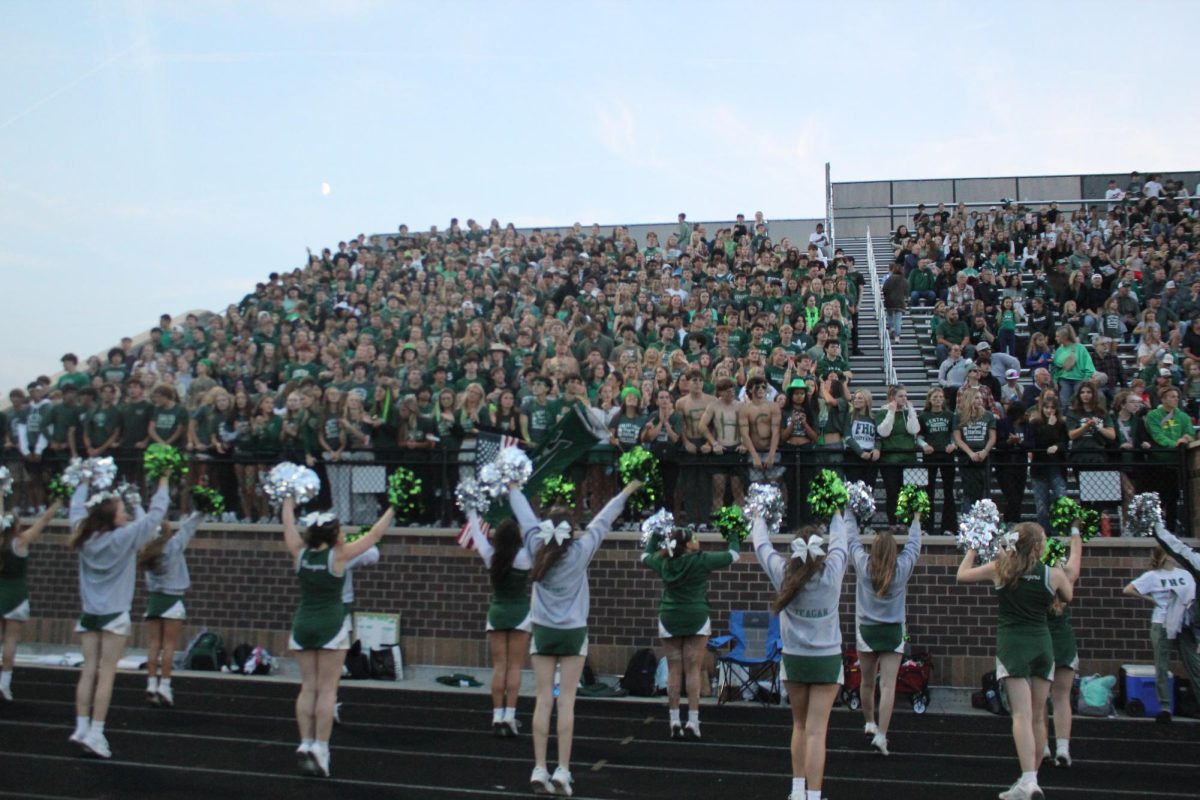
FHC is sometimes united. Take football games, for example. In the crisp autumn evenings, when the bleachers are filled with cheering students, it’s hard to deny that our school has a collective spirit. Similarly, FHC’s high-energy assemblies encourage cross-grade unification through chants like “This Is Ranger Country.”
Yet underneath these seemingly positive moments, there lies a tension between the grade levels. Our football games are characterized by the inevitable chanting of “Go home freshmen,” for one. Assemblies, for their part, typically encourage competition between different classes through activities like the mattress race and tug-of-war.
Disha feels that more opportunities for connection could rectify this issue.
“I think that our school in general [would benefit] if we were able to find a better way to get [the different] grades to come together in a more meaningful way,” Disha said. “I feel like that would be great because, obviously, we have our assemblies and the ‘This is Ranger Country’ [chant], but we don’t get the opportunity to talk to a lot of our upperclassmen. I think that’s part of why underclassmen are so afraid of upperclassmen—just because we don’t get to talk to them. Finding a way to [accomplish that] would be great.”
All upperclassmen remember what it was like to be a freshman or sophomore. Most of us had certain individuals older than us whom we idolized because of their apparent effortlessness at being “cool” or their remarkable abilities in academics, fine arts, or athletics. As an underclassman, it felt special to be friends with those who were two or three years older.
Despite this, it seems like many of us current upperclassmen don’t treat younger students like we would’ve wanted older students to treat us. We’re older, making it our place to forge connections with freshmen and sophomores, not the other way around.
This can happen on a day-to-day basis, in classrooms and hallways. However, a common objective, a mission that unites all students, could help us to form these connections. According to Advanced Placement (AP) Psychology teacher Danielle Redman, a shared goal is one of the best ways to create a thriving culture.
“One of the key elements of creating culture seems to be a collective goal,” Redman said. “If a group can form a collective goal, that can often break down divides between groups. There are a lot of studies that show that when you give, let’s say, two groups that have been opposed to one another a common goal, then they are no longer working against each other but working with one another. That seems to be really helpful. I think if our school were to create a goal that is something that a lot of people could latch onto, that would really help with creating a more cohesive culture.”
At the moment, our athletic events are the best example of unity for the student body. But as mentioned earlier, they aren’t always so inclusive, and to be fair, sports aren’t for everyone. They’re also centered around the destruction of another group, even if that other group happens to be another school.
While competition is healthy, what if FHC had a goal that was centered on achieving a positive objective? We get hints of this during our spirit weeks. For example, during Family Promise Week, we collectively raised thousands of dollars, exceeding our initial target. Students worked together to achieve this, and the end product was money to help other Grand Rapids citizens.
If we were able to create a goal that embodied this same spirit, one that lasted the whole year, FHC could develop a more united community. With upperclassmen and underclassmen on the same team, both making a conscious effort to befriend one another, our school culture could change.
“I think we do need to make sure that we’re really clearly identifying what we want our school culture to be,” Redman said. “Right now, we have kind of a lot of ideas around school culture. We have school culture in terms of academics. We have a certain culture in terms of behavior, culture in terms of athletics. What is our goal?”

Katty Anderson • Jan 12, 2026 at 7:38 pm
you ate down with this feature!
leah griffin • Jan 12, 2026 at 11:11 am
this is so good and true i love it