
























For nine months out of the year, students at FHC walk into school expecting to learn and grow as they move forward in their education. Behind that process are the staff members who make it possible, showing up each day to guide and shape the environment students rely on during some of their most formative years. Many staff members’ work is structured, often extending beyond what is seen during the school day.
When the school year comes to an end, that structure shifts. Students leave for summer break, stepping away from the routines of school and into time off. Staff members, however, face a different reality. While they are no longer in the building each day, the pause in the academic year does not always feel like a complete stop. For many, the summer months become a time to seek out other opportunities and fill the space left by the school calendar.
Because of this, teachers and staff who are typically seen in hallways and classrooms during the year may be found elsewhere during the summer, taking on different roles before returning to school. Counselor Suzanne Jacoby has found many ways to fill up her empty time. For the 15 years she has been in education, many of which she has spent helping out at summer school or as a lifeguard for MVP Sportsplex. This year, she has taken an alternative route, moving into a server role for the West Michigan Whitecaps.
Jacoby is only serving between two and four tables each night, and the job has become a manageable way to stay active without taking up too much of her time. It also gives her the chance to connect with fellow educators outside of the school setting.
“I really work for something to do, because I don’t like to just sit around,” Jacoby said. “I have two friends who do the suites [for the West Michigan Whitecaps], but I was looking at the list of other employees, and I know quite a few of them.”
Her previous experience, including her time at the MVP Sportsplex, has allowed her to apply her counseling background in settings outside of education.
“I worked with a lot of kids who had just graduated, because you had to be 18 to work there,” Jacoby said. “So I got to use some of the things I do in education there because they would [say] ‘hey, since you are a school counselor, what should I do about this?’ So that was kind of fun to be able to interact with those kids.”
Across the hall from Jacoby is counselor Victoria Velding, who also participates in an abundance of summer jobs. For the past couple of years, she has found herself up north participating in her sister’s cleaning business.
“I have been cleaning with [my sister], and we clean Airbnbs, [and] new builds,” Velding said. “[We will also clean] for contractors before the people move into the houses…So it’s kind of a little bit of everything. Every Saturday, I clean rental cabins on a lake, so that’s kind of my main one.”
Her sister’s cleaning business is not the only family-run business she participates in during the summer months.
“This summer, I’m probably gonna be helping out my nephew and his wife, who bought the local ice cream place,” Velding said. “They [sell] hard-serve, scooped ice cream. And they sell homemade fudge. So, I volunteered to help make fudge this summer when they need help. I’ll be doing both of those.”
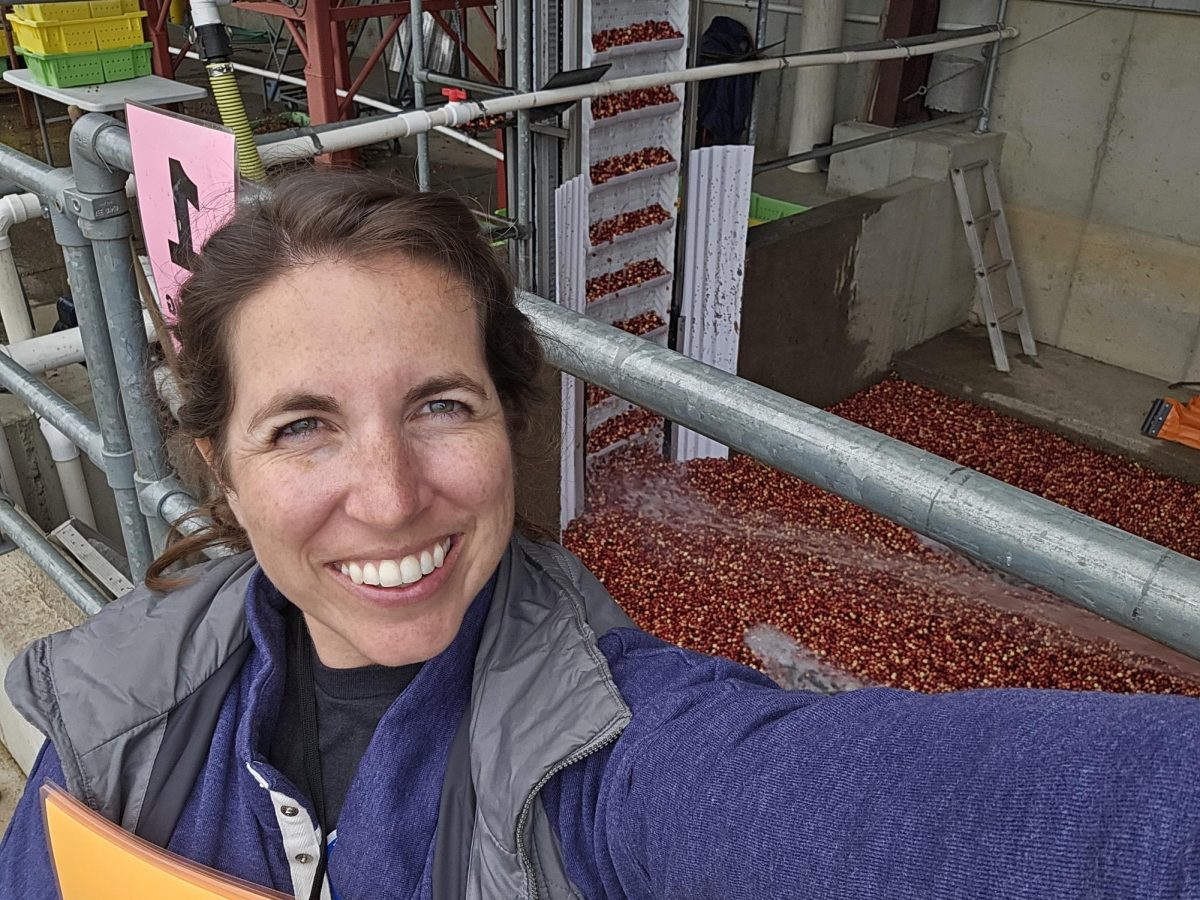
American Sign Language (ASL) teacher Kimberly Anderson has held a summer job since she was 16, consistently finding ways to stay active and engaged outside of the classroom. During many of her years in education, she has spent her summers working as a salesperson at her college roommate’s blueberry farm in South Haven, Michigan. There, her role goes beyond selling produce; she interacts with customers, answers questions on blueberry varieties, helps them choose based on taste preferences, and even offers guidance on plating and growing their own.
“My college roommate owns a blueberry farm. So she invited my other roommate and me down for the summer, and I fell in love with it,” Anderson said. “And because I’m always around plants and flowers and nature, it seems like a really good fit.”
While the job may seem very different from teaching at first, Anderson sees a strong connection between the two. The skills she uses in the classroom often carry over into her summer role, especially when it comes to connecting with a wide range of people.
“Through all of my summer jobs, I have met and worked with such a variety of people,” Anderson said. “I feel like having communication and basic people skills is so important, being able to walk up to someone and just strike up a conversation, or if someone asks me a question, learn how to practice responding in more proper, adequate, [and] efficient ways…So I think summer jobs are great.”
