















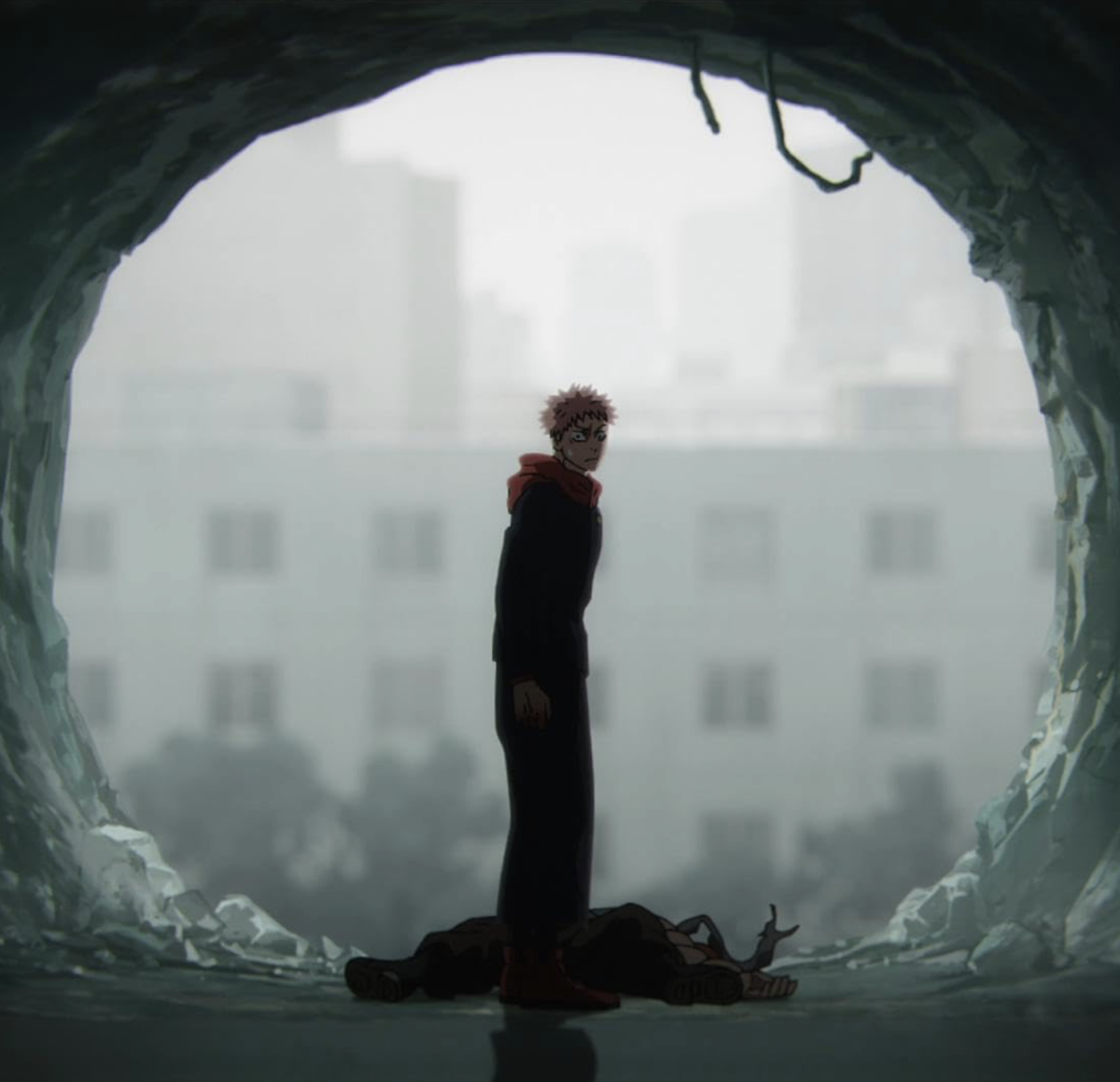
Jujutsu Kaisen (JJK) has solidified its spot at number one in the long list of shows that I have watched. With beautiful quotes, hilarious and relatable characters—and a plot that is unusually interesting and humorous—it’s a well-created show.
The JJK manga began in Mar. 2018, with a later anime adaptation releasing its first season in Oct. 2020. After an extremely popular season one release, season two ran in July 2023, with the most famous and devastating storyline: Shibuya Arc. Finally, in Jan., JJK season three came out, with tons of anticipation from fans, and it delivered exactly what it needed to.
JJK features the main character, Yuji Itadori (Adam McArthur), who discovers Jujutsu using cursed energy to defeat enemies who want to endanger the general public. The school faces two main enemies: a group of humans seeking to wipe out everyone but Jujutsu sorcerers to get rid of cursed spirits, and the existence of cursed spirits that kill everyday people. Through their adventures, Yuji and other characters face difficulties and challenges they must overcome by improving themselves mentally and also by getting better at the art of Jujutsu.
One of my personal favorite aspects of the new season is the improvement of the animation style. A lot of common anime fans know the infamous One Punch Man for its horrendous animation, and a single second in the third season of JJK probably has more frames than a full couple minutes of One Punch Man.
Shota Goshozono, the director of part one of season three and all of season two, storyboarded every single scene in his work. This process involves meticulous planning, and drawing every scene almost like a comic to accurately translate the manga into an animated series. New angles and the use of rotoscoping—tracing characters on humans to improve hyper-realistic movement—immerses the viewer more than ever before. I truly believe that one of the main reasons this season was rated higher than all the others was because of Goshozono’s work.
Episode 51—“Perfect Preparation”—or the fourth episode in the third season, is my absolute favorite, besides the final episode of part one, “Sendai Colony.” JJK, in general, features strong, dominating characters, but it also empowers women. Maki (Allegra Clark), a twin, which is seen as bad luck in Jujutsu society, is the main character of “Perfect Preparation.” Not only does she have one of the coolest swordplay scenes of the entire show, but she also gets to take out a patriarchal man, Naoya (Alan Lee). The most iconic aspect is the final punch by Maki to Naoya, which is replayed four times, giving the viewer a sense of accomplishment when he finally gets taken out.
Though season three can get boring at certain points because of the introduction of rules from “The Culling Games,” the action redeems this season to be one of the best yet. The dynamics between new characters suck you in, and the last episode of part one, “Sendai Colony,” has some of the best storytelling and fighting scenes I’ve ever watched.
All seasons of JJK are 100% worth watching if you can adore the characters as I do, but season three is levels above anything else. Viewers can truly tell that the directors spent hours upon hours to perfect the show to be the absolute best for whoever watches it.
