



















Since its introduction in 2023, FHPS’s most recent bond is nearly halfway through the six-year project. The bond was issued to fund $340 million in capital improvements, infrastructure upgrades, and modernized learning spaces across all FHPS buildings. These modernized learning spaces, including expansive windows, updated furniture, and BenQ Boards, were introduced to create collaborative learning environments for FHPS students.
More recently, these updates have seemed to cause more problems than they solve, leading many to wonder whether the $340 million in renovations is really necessary.
BenQ Boards have procured the most complaints among teachers and students alike. Though they are intended to provide both easy access and higher security to educators, many staff members, like English 10 teacher Tony Sultini, have found the “giant iPad” to be more of a nuisance than a helpful device.
“The old adage is that you fear the things you’re not too sure about,” Sultini said. “I can get by, but I don’t want to just get by. I want to know specifically what to do and how to use it… I think eventually it’s going to be a good thing, but right now, I’ve got my projector, and that’s what I’m used to, and it’s easier for me [than the BENQ Board].”
BenQ Boards aren’t just annoying because of their steep learning curve—they also directly conflict with the objectives of various courses, namely AP Seminar. Because BenQ Boards are on their own (weak) Wi-Fi networks, AP Seminar teachers have noticed that this inhibits students’ presentation skills.
On top of this, the BenQ Boards are ginormous, taking up incredibly more space than the old practice of projecting one’s computer screen onto the wall-mounted whiteboards. AP Seminar teacher Morgan Beckett, while praising the comfort of the new furniture and the ease of using the BenQ Board, has noticed the strain they have put on her already cluttered classroom.
“I’m thankful for the new furniture,” Beckett said. “I think the chairs are more comfortable; the desks are more comfortable than what I had before, but I think we should have thought carefully about the spaces that they [occupy]… Just because the BenQ board, combined with the new furniture, doesn’t quite fit well in the spaces when we have nearly 30 students.”
Overall, many of the updates involving collaborative spaces are immensely beneficial for collaborative classes like AP Seminar. The updated media center, finished by the start of the second semester, was only a glimpse of what collaborative spaces can provide. Beckett has already been able to use the updated lecture hall and group study rooms for AP Seminar, a class with hundreds of presentations executed throughout the year.
Other teachers are excited to use these new spaces as well. The finished library, upcoming hallway spaces, and window-filled classrooms offer a promising change of scenery—but in some regards, a potentially dangerous one. In the age of school shootings, one cannot deny that walls being nearly fully replaced by windows may not be the best choice for American high schools. Exterior windows, although more expensive than interior ones, might be a better alternative, as they let in natural sunlight and thus help keep students awake.
Since both options have potential consequences, one can wonder if windows are really necessary for learning environments at all—or if they are just another “improvement” to show progress.
“I’m against spending money just for the sake of spending money,” Sultini said. “If that money is well spent, sure, it’s great, but if it’s just to buy something that’s supposed to be the latest and greatest, just for the sake of [buying] it, I would not necessarily be all for it.”
At the same time that FHC receives unnecessary refurbishments, one part of FHC that needs renovations—perhaps more than the average classroom—remains mostly untouched: the music wing. This wing of our school includes the choir, band, and orchestra classrooms and practice rooms, the auditorium and its lobby, and an additional classroom (usually occupied by the theater teacher for access to the costume closet).
The updates pledged to these rooms, according to FHC Orchestra teacher Andrew Pool, are mostly cosmetic; however, some issues in these areas pose actual problems rather than just being “outdated.” For example, the orchestra classroom’s inherent dryness, combined with the fluctuation in heat from warmer weekdays to cooler weekends, leads to wood shrinkage, which can cause many orchestral instruments to crack.
“If there were better control of the humidity level and the temperature in the room, so that it would be a little bit more consistent and the humidity a bit higher, that would certainly help our instruments,” Pool said. “Also… the lighting in this room is not optimum, and the ceiling being so dark—it really does take away a bit of the ambient light in here. That’s a challenge.”
The only renovations explicitly named in the original bond proposal that benefit music courses are updates to the FHPS Fine Arts Center. This is used by everyone in the district and by outside performers, which sometimes poses a challenge in terms of availability. So, much of FHC’s fine arts performances must instead be held at the auditorium, a space that is receiving next to no updates from the 2023 bond.
“Don’t forget that the Fine Arts Center is a very, very busy building, and we’re lucky to have that building to use, but we’re also very fortunate to have a really perfectly adequate auditorium right here, connected to our school,” Pool said. “In the last few years, we’ve received a brand new acoustic sound shell, and the use of that makes the room a lot more conducive to concert events and music events.”
The auditorium has been fortunate to receive numerous updates since being added to the school in 1977, including the installation of acoustic shells and a 2010 remodel. Still, since this space isn’t receiving any updates for this round, which has almost the entire building refurbished in the likeness of a university, the music wing may appear to be lagging behind. The auditorium also has several technological problems, including defective lighting and a curtain system, a stage that has long since been repainted, and defective microphones.
“Sometimes it’s embarrassing having people come into our theater and the ticket booth is straight out of the 1970s and has an odd smell, and there’s stains on the ceiling, and our floor hasn’t been painted in a long time,” said Beckett, who is also in charge of the fall play and improv team—both of which occupy the theater for long periods of time. “It just shows that we don’t really take care of the space that we have, and so I would like to see a little bit more care put into the theater, because we could totally make use of that space.”
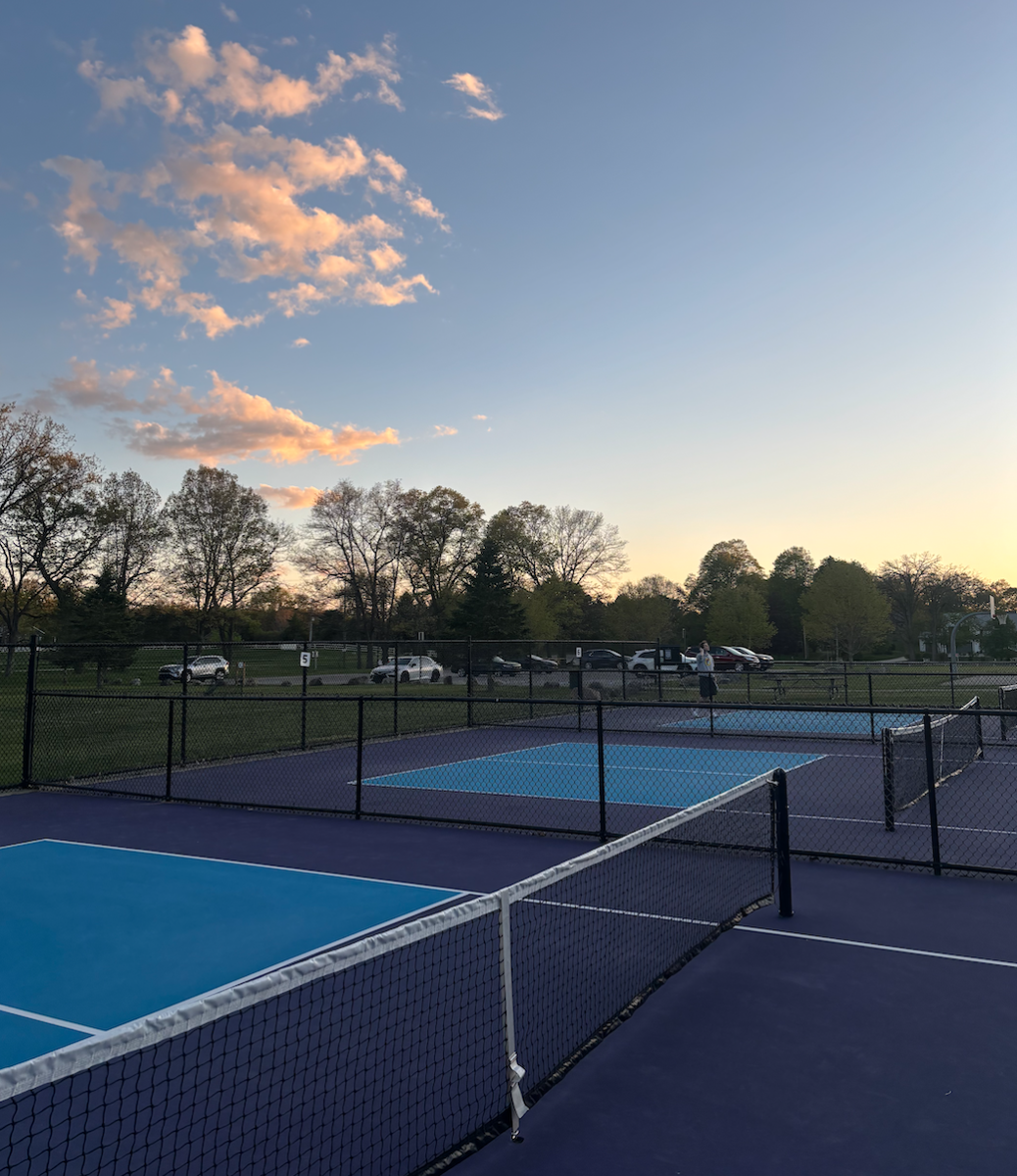
This is a tale as old as time. While the softball and baseball fields receive turf, the tennis courts are expanded, and an entirely new aquatic center is built, the fine arts receive smaller, less dramatic attention. Some may view this as an indication of where the district’s priorities lie, but overall, fine arts students and supervisors alike are grateful for the improvements they receive.
“I think most of the updates that [music] gets trickle in,” Pool said. “It’s new chairs, one year; new music stands, one year; some new instruments, other years. Our place is pretty adequately stacked with the stuff that we need to be successful.”
