



















Anyone who knows me also knows that I love Steven Page. Or at the very least, knows that I love Barenaked Ladies, and through deductive reasoning would also know that I love their original lead singer.
Page was born in Scarborough, Ontario, in 1970, and after taking ten years of piano lessons, being a member of the Toronto Meddlessohn Youth Choir, and having his childhood best friend stolen by Ed Robertson, joined Robertson in a band called Barenaked Ladies. The band took off partway through their college careers, becoming the Canadian alt-rock band of the 1990s, early 2000s, and my bedroom CD player.
Though some criticize Page’s powerful tenor for its Kermit-like tendencies, to me, Page represents everything that vocal rock performance used to be: unique, genuine, and raw. In popular music, especially more recently, it’s extremely rare to find a unique timbre like this, which makes me all the more appreciative of artists whose voices are, in fact, unique.
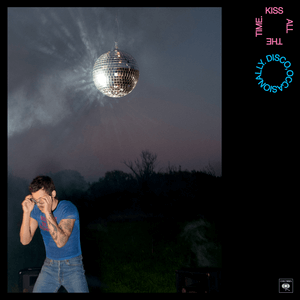
When scrolling TikTok one day, a dim-lit video of a curly-haired girl and her acoustic guitar caught my eye: Annabelle Dinda. After her viral single “The Hand” gained traction across social media in Oct. 2025, Dinda has since released a full album titled Some Things Never Leave. Throughout these ten tracks, Dinda has proved that her vocal tone isn’t the only unique facet of her alternative music.
The album starts off strong with two songs that I love blasting in my car: “Big News Day” and “Cosmic Microwave Background.” In “Cosmic Microwave Background,” Dinda compares the leftover radiation from the Big Bang to parts of people that will always be there, thus creating the album’s title in the chorus: “Hear the relic radiation / Buzzing through the TV station / Did you ever think you’d say / You know what you know? / You’ve seen what you’ve seen? / Some things never go / Some things never leave.” This song is just one great example of Dinda’s amazing lyricism, followed up by “Satellites.”
“Satellites” is another lyrical highlight—though almost every word of this album is highlighted for me. In the chorus, Dinda laments over an abusive relationship where the subject can’t comprehend that Dinda’s negative response is a direct result of their actions. As her voice mounts in key and volume, she explains the faults in their relationship, saying, “And I make such a deal of using words syllabically / that you’re too busy sounding out to shuffle after me / There’s nothing you like less than knowing someone’s past your grip / You put me into space then hate me when I ask for it.” Indeed, “Satellites” is self-referential in its own honesty: Dinda uses words so syllabically that the listener, too—not just the subject—is too busy sounding out her words to follow them. My favorite lyrics of this track are towards the end, where the repeating words of the bridge overlap both metaphorically and literally with the first words of the song: “Don’t bark like it’s high divining / Don’t bite and expect no bruise / Don’t start with the diatribing / Then spite all the love you lose.”
Another unique aspect of Dinda’s album, besides her lyrics and vocals, is her melodies. I have tried—and failed—to play “Cosmic Microwave Background” on my own guitar. Not because the chords were particularly difficult or fast, but because the song was so vocally difficult to sing. Her words are dynamic in every possible way: lyrically, in volume, and in pitch. One song that exemplifies this is “Gunpoint, Headlock,” especially in the chorus: “You would think every time I go out someone’s holding me at gunpoint / You would think everytime I am traveling the tracks are gonna unjoin / ‘Cause to think and to live and to die is just flipping at the same coin / Till there’s nothing left to spend.” This song is also yet another example of her incredible lyricism. In an interview with Ones to Watch, she described her writing process on this track. “In terms of writing, it came out very naturally. There was no ‘I’m going to do something intentionally that’s going to bring it out.’ It was more just the way I always do it, which is just whatever falls out of me at the given time I’m trying to write.” This made me even more impressed by her incredible writing.
The album ends with “London Plane Trees Grow in Philly,” which feels a relatively placid finish to such a powerful journey. This is far from the truth, as Dinda has remarked that it is the most true to her song on the entire album. The song tapers out as she vocalizes the melody of the repeated verse, which I have interpreted as melodramatic—but hopeful.
