






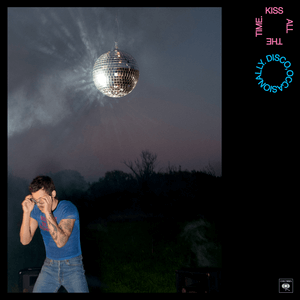







Clairo. Father John Misty. The Backseat Lovers.
All of these artists have something in common. No, it’s not their incredible Halloween costumes, nor their cult-like followings. Rather, all of them, as well as a host of other artists, I discovered via TikTok.
There are plenty more than the ones I just mentioned, but these are merely the most well-known. Some more “niche” artists I discovered online include Annabelle Dinda, The Figs, and, more recently, singer-songwriter Abby Powledge.
Powledge’s viral single, “winding down,” had already gained prominence on TikTok before its Nov. 2025 release. I was entranced by the trend of coloring the bridge lyrics yellow and overlaying them on a somber background video: “Slow-burn in reverse / You wanted me first / and it only hurts / cause I saw it coming.” These words were ingrained in my mind—in yellow.
Later, in Feb., Powledge released a full EP to accompany “winding down” and two other singles. In all honesty, when to step away left me a little underwhelmed. The lyricism was fine, her composition was fine, and the indie, acoustic, singer-songwriter vibe she emulated was fine, too. Besides “winding down,” the rest of the EP was just that: fine.
That is, before I listened to “i still check your playlists.” Don’t get me wrong, this track was just as simple as the other five on the EP. But as I listened to Powledge’s resounding voice, I began to resonate so clearly with her lyrics, realizing I didn’t need them to weave a web of literary devices in order for me to value them.
Still, this song had its fair share of complexity, as Powledge used a habit of checking an ex’s playlists as a symbol of her unwillingness to move on. The repeated use of the phrase “I still check your playlists” to open nearly every verse and chorus makes this habit even more apparent, and the metaphor even more powerful. Similarly, she compares music with communication, lamenting “I still check your playlists / you’ve added all my songs / but you’re not really listening / you only hum along.”
As I listened to when to step away more, I began to appreciate the plainness of the entire EP, giving another song to emerge as a favorite: “and then there’s me.” In this track, Powledge’s acoustic guitar accompanies her voice up and down the E major scale, quickly muttering the lyrics almost as if they don’t matter, as if she’s trying to impersonate indifference. As the chorus breaks, Powledge deposits a series of things she loves about the subject, followed by a series of her own faults. This track is a testament to all the songs that could have been love songs if not held back by fear and insecurity.
I didn’t dislike any of the tracks enough to exclude them from my April playlist, a culmination of every singer-songwriter/indie-adjacent girl I listen to (and Kevin Atwater). The six songs in when to step away were the first to be added to that playlist, and I have listened to them nonstop since then. Now, I can officially add Abby Powledge to my ever-growing list of amazing artists I found through social media.
